Electric vehicles are becoming the norm. If you’ve bought one—or are planning to—a home charger is a game-changer. Charge overnight, wake up with a full battery, and never visit a petrol station again. Here’s how it works.
Wall box vs. 3-pin plug: Why wall boxes matter
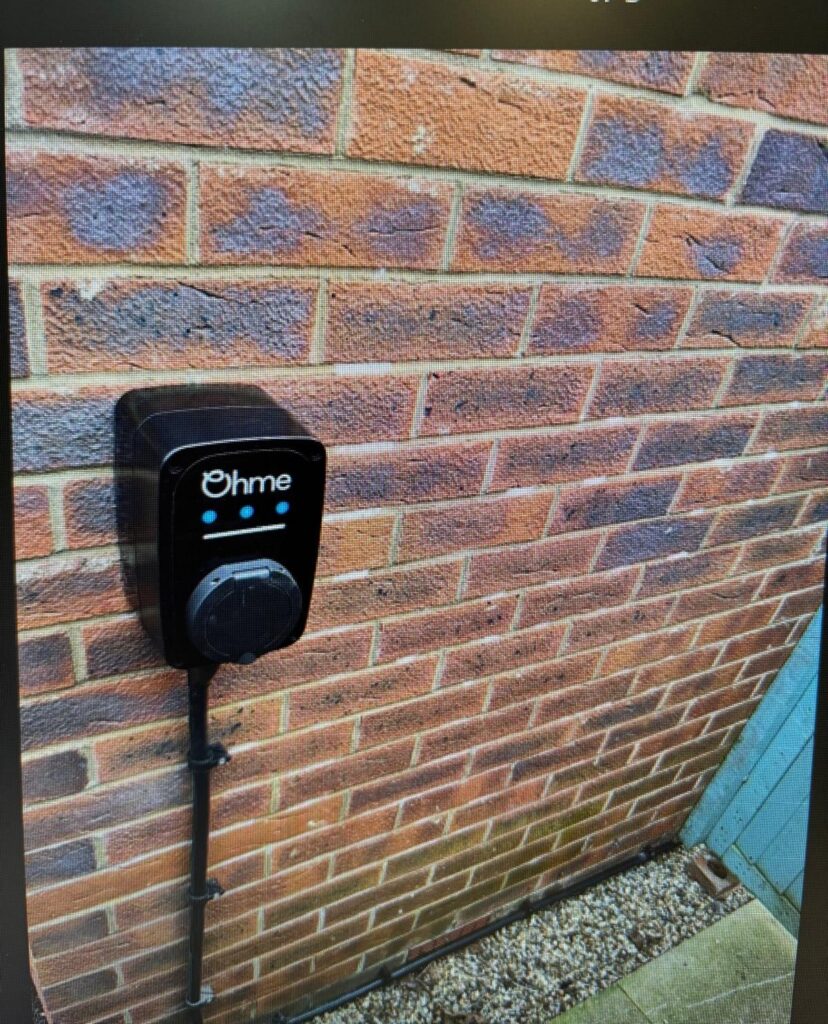
You can charge via a standard 3-pin plug (granny charger), but it’s slow and potentially unsafe. A wall-mounted charger is faster, safer, and actually cheaper in the long run because you’ll charge faster and use cheaper home electricity instead of paying premium prices at public fast chargers.
7kW vs. 22kW: Which should you choose?
- 7kW (single-phase, most homes): charges 25–30 miles of range per hour — perfect for overnight charging, and the simplest install.
- 22kW (three-phase, larger homes): charges 80–100 miles per hour. Overkill for home use unless you already have a three-phase supply and cover serious mileage.
Most UK homes have single-phase supply, so 7kW is the standard choice.
What the quote depends on
A 7kW home unit is a contained job, but the price still moves with:
- Location of the charger. Near the car port is cheapest; running cable 30m across your garden costs more.
- Your home’s electrical capacity. Some older homes need a sub-board upgrade first.
- Cable routing. Easy wall-mounted runs cost less; underground ducts cost more.
- Permissions. If you’re in a flat or terraced house, landlord/freeholder approval takes time but not money.
Government grants and OZEV
The UK government’s OZEV grant for single-family homes ended in March 2022. Some councils still offer grants, so it is worth checking with your local authority, and your energy supplier may run its own subsidy.
Safety and Building Regulations
EV charger installation is notifiable work under Building Regulations. Your electrician must test the installation and provide certification. This protects your home, your car, and your insurance.
Smart charging vs. dumb
A “dumb” charger is cheaper up front but charges whenever you plug it in. A smart charger lets you schedule charging into off-peak hours, shift it to suit renewable generation, and monitor usage from an app. The difference in price is usually recovered inside a couple of years of off-peak charging, which is why we fit smart units as standard.
Bottom line: get a fixed price after someone has actually looked at your board and your cable route, choose a 7kW charger if you are on a single-phase supply, and go smart so you can charge off-peak. The installation itself is a 2–3 hour job for a qualified electrician.