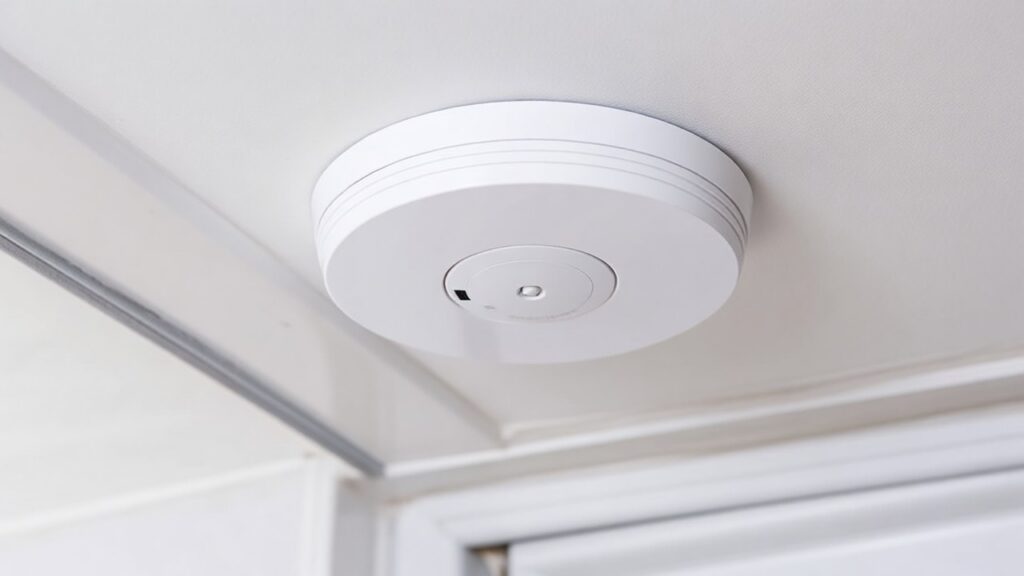
Protect your household with mains-wired, interlinked smoke and heat alarms installed to the current standard — tested, certified and giving you proper early warning.
Why working alarms save lives (and why people neglect them)
Smoke inhalation kills more fire victims than burns. A working alarm gives you 10–15 minutes to escape; without one, you might have 2–3 minutes once smoke fills a bedroom. Mains-powered, battery-backed, interlinked alarms are the standard that actually works — when one detects smoke, they *all* sound throughout the house so people upstairs and downstairs are warned equally. Single alarms in separate rooms don't work well if smoke doesn't reach that room first. People often neglect alarms because they assume nothing will happen, or because they trip on cooking fumes and get disconnected. Good system design minimizes false alarms while maximizing real protection.
System design for your home
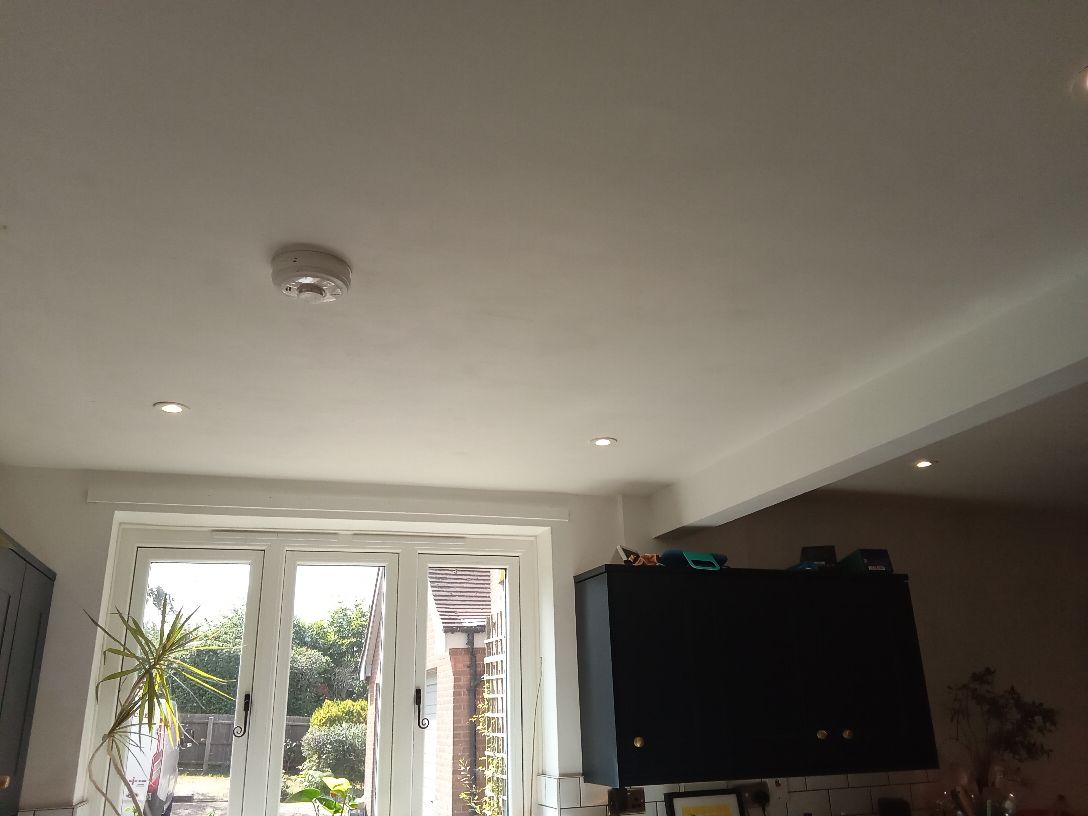
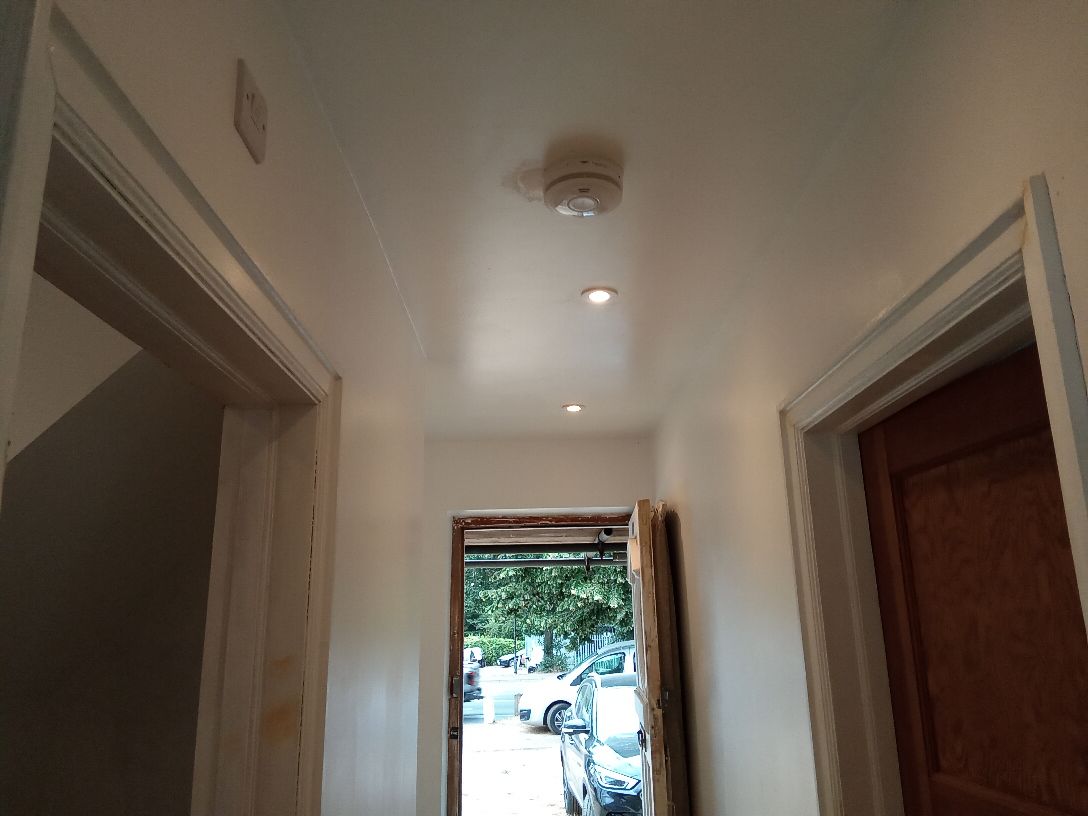
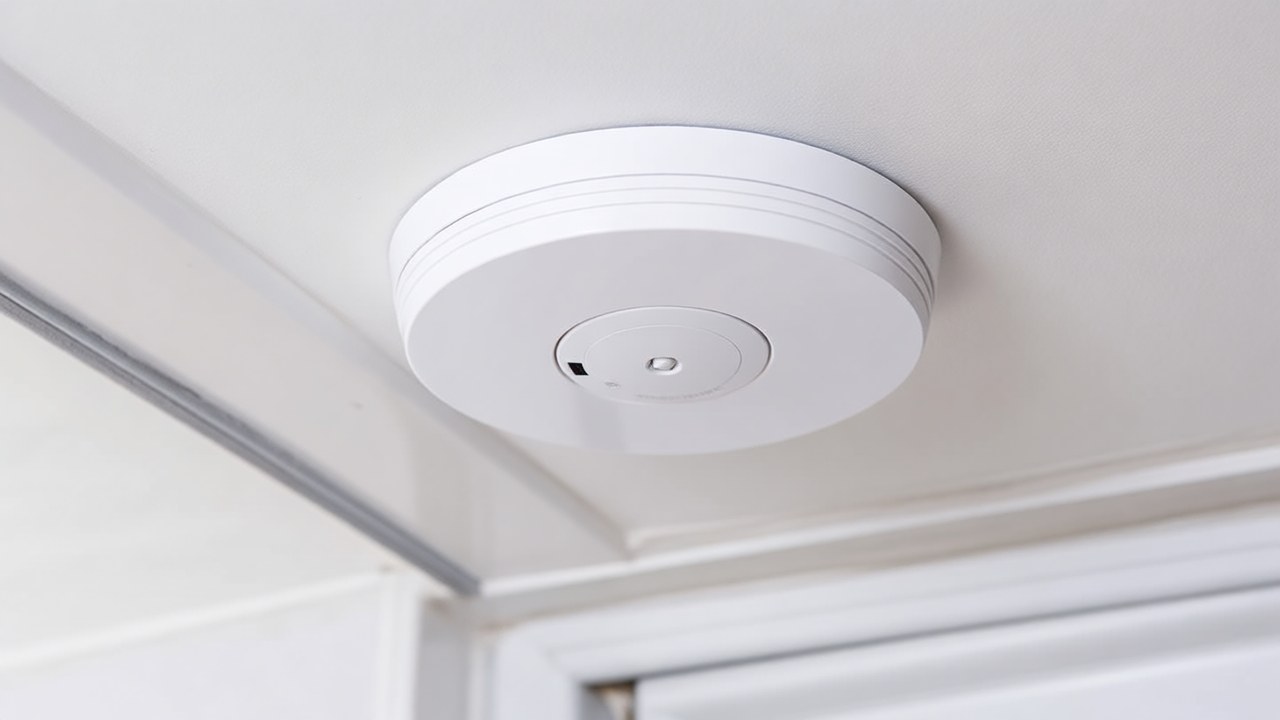
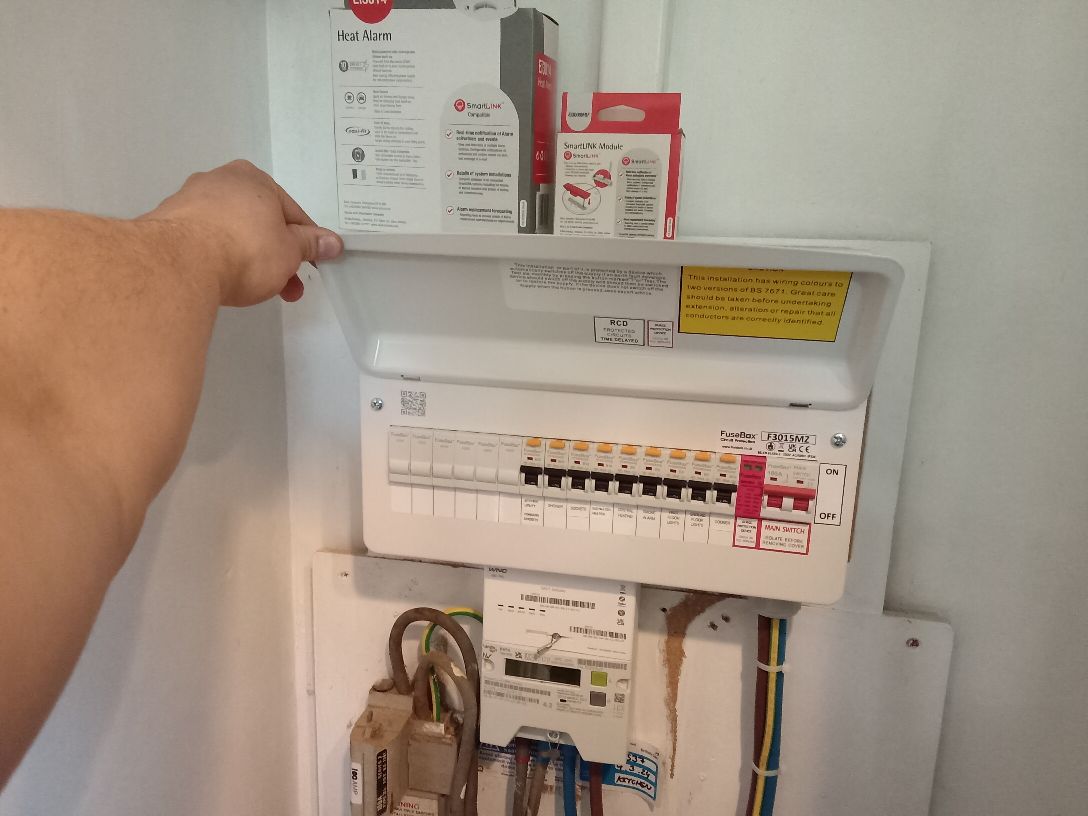
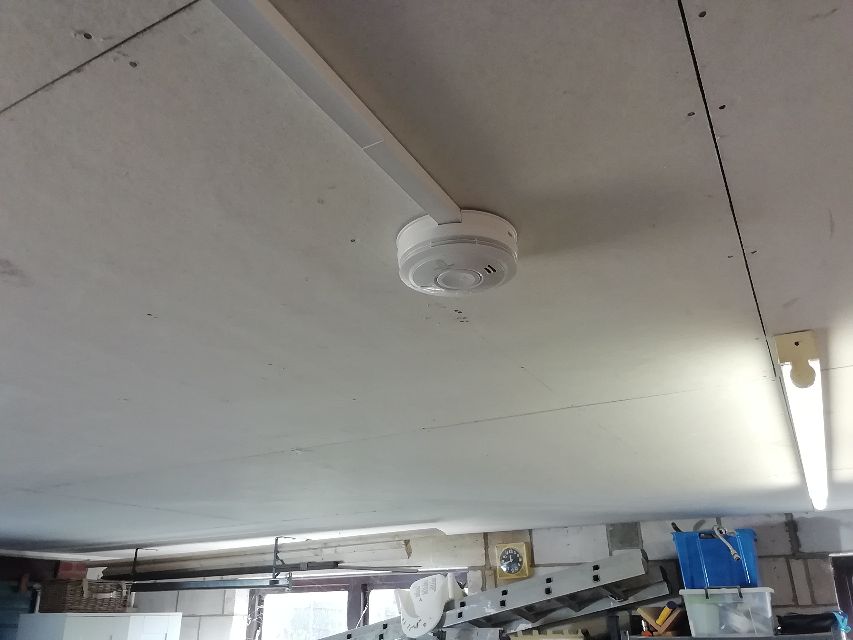
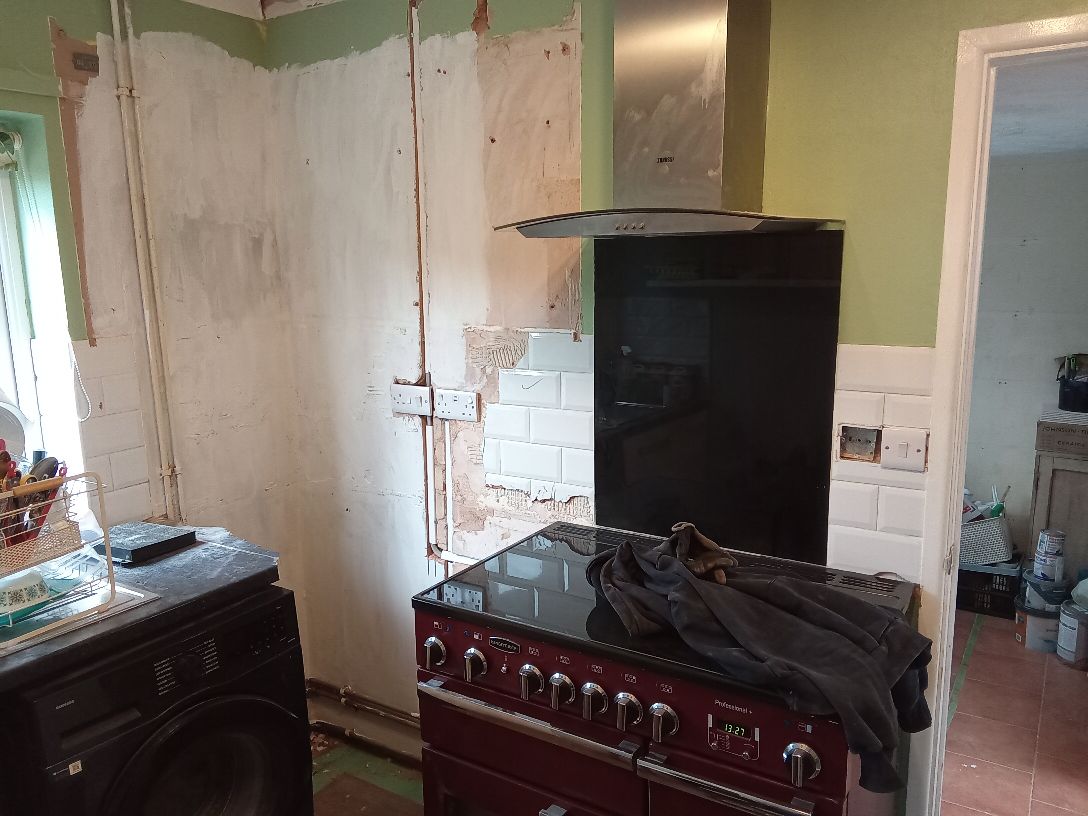
We survey your layout and install: optical smoke alarms (living areas, hallways, bedrooms) — these detect visible smoke particles and are less prone to cooking fumes. Heat alarms (kitchen, garage) — respond to temperature rise rather than smoke, so cooking bacon doesn't trigger false alarms. Interlink: All alarms wired on a circuit so they sound together — when one detects danger, everyone in the house knows instantly. Battery backup: Mains power with a 10-year battery so alarms work even if power fails (during a fire, for example).
Where alarms go
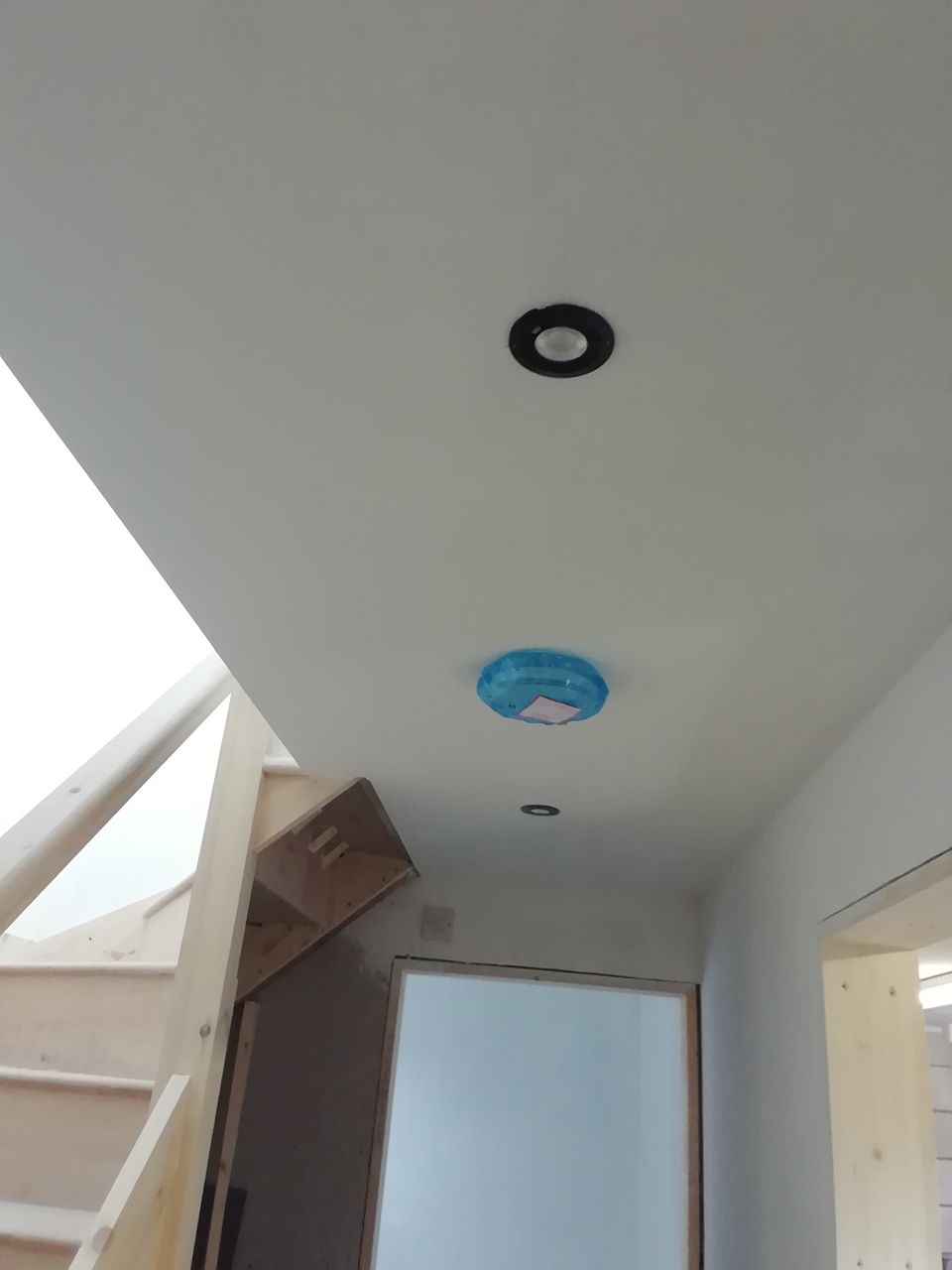
On each floor, at least one in a hallway or main living area (where people spend time awake). Bedrooms get them too (you need warning while sleeping). Kitchens and garages get heat alarms. Stairs, lofts, and cellars also get coverage. A 3-storey house typically needs 6–8 alarms.
What we fit, and why
A whole-house install is priced on the number of alarms and how hard they are to wire together — an open modern house is quicker than a period property with solid floors. Battery-only alarms are cheaper up front but noticeably less reliable over time, because people forget to test them and forget to replace the batteries. We recommend mains-powered alarms with battery backup and full interlink: it is the standard the Regulations are built around, and it is the one that still works at three in the morning.
Smoke, heat and carbon monoxide — which detector goes where
The three types are not interchangeable, and putting the wrong one in a room is the single most common reason a household ends up disabling its own alarms.
Optical smoke alarms see the large, slow-moving smoke particles produced by smouldering fires — upholstery, bedding, an overloaded extension lead behind a sofa. They are the right choice for hallways, landings and living areas, and they are noticeably less twitchy about cooking than the older ionisation type. Ionisation smoke alarms respond faster to fast-flaming fires with small particles, but they are also the ones that go off every time you grill bacon, which is why we rarely fit them near a kitchen and why so many of them end up with the battery out. Heat alarms ignore smoke entirely and trigger on a set temperature or a rapid rate of rise — which is exactly what you want in a kitchen, a garage or a utility room, where smoke and steam are a normal part of the day. Carbon monoxide alarms are a different job again: CO is odourless, a smoke alarm cannot see it, and any room with a fuel-burning appliance — boiler, gas fire, log burner, gas hob — needs its own CO detector sited near the appliance.
Get that mix right and the system stops crying wolf, which is the whole point. An alarm that people trust is an alarm that still has a battery in it three years later.
Resets, false alarms and the one that won't stop beeping
This is what most people actually ring us about, so it is worth setting out properly.
A single chirp every 30 to 60 seconds is almost always the backup battery, not a fire. On a sealed 10-year alarm that chirp means the whole unit has reached end of life and needs replacing — the battery is not removable by design. On an older head with a replaceable cell, it is the cell. Either way it is telling you something real, and taking the alarm down to stop the noise leaves you unprotected.
An alarm that has sounded and won't reset usually has smoke or steam still sitting inside the chamber, or dust and insects that have built up over the years. Most modern heads have a hush or test button that silences them for roughly ten minutes while the chamber clears. If it keeps re-triggering after that, the head is either contaminated or failed, and on an interlinked system you also need to work out which head started it — many units flash an indicator LED on the originating alarm only, which is the quickest way to find the culprit in a house where all of them are screaming.
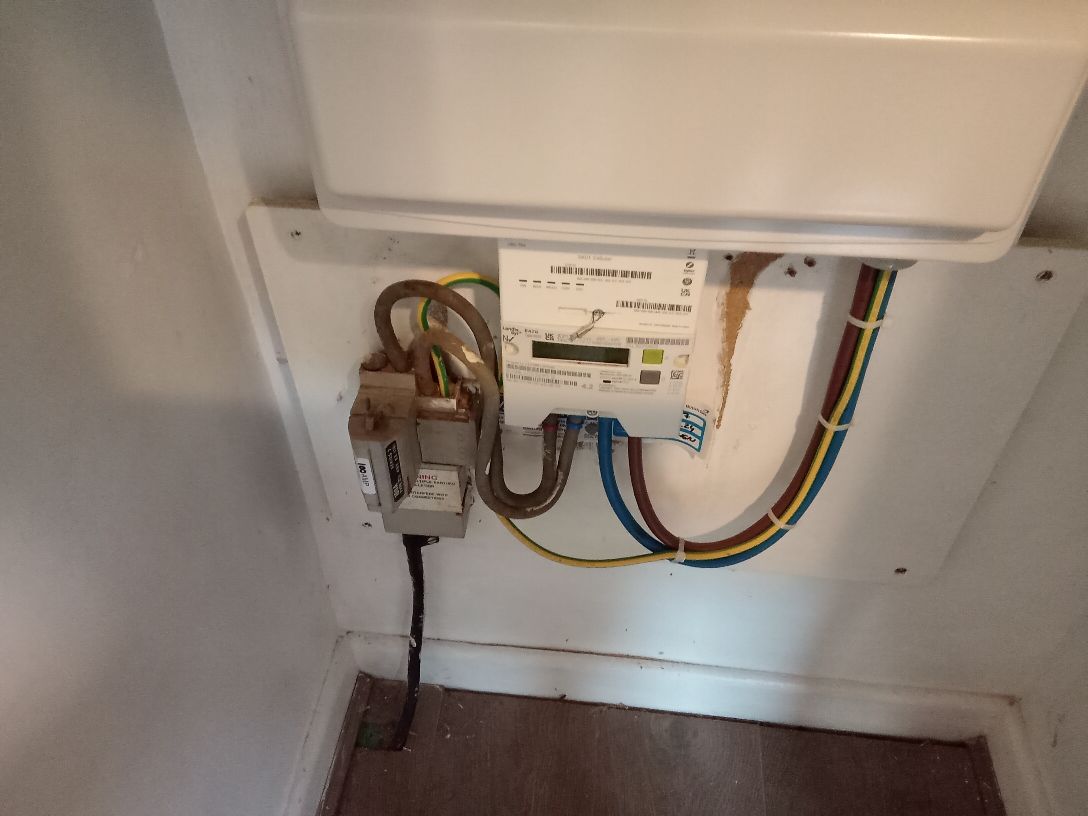
A whole interlinked system sounding with no obvious cause points at either one failed head or, on a mains system, a supply problem. Isolating the alarm circuit at the consumer unit will stop it, but it also disables your protection — so that is a way to get through the night, not a fix.
What we do: come out, identify the head that triggered, clean or replace it, test the interlink across the whole system and leave it working. We also get called to systems somebody else fitted where the interlink was never commissioned properly — the alarms sound individually but never together, which is the failure mode you least want and the one nobody notices until it matters.
Interlinking, grades and what the standard asks for
Interlinking is the part that does the work. A smoke alarm in the hall is no use to somebody asleep at the top of the house unless every alarm sounds when any one of them detects. That is what BS 5839-6 Grade D1 means in practice: mains-powered alarms with a tamper-proof backup, all interlinked, sited on every storey. Interlink can be hardwired, which is the most reliable and what we fit during a rewire, or radio-linked, which is what we use in an occupied house where lifting floors isn't practical. Both are compliant; radio-linked simply costs a little more per head and saves you the making-good.
Landlord requirements
In England, landlords must provide working alarms and test them monthly or have a professional do it. The system must be mains-powered as of April 2024 (battery-only is no longer compliant). We install compliant systems and provide landlords with certification and testing schedules so compliance is proven.
Peace of mind
Once installed and tested, a system gives you real protection. We show you how to test monthly (a simple button press), and can arrange annual checks so everything stays in working order.