Protect your premises, people and stock with a commercial fire alarm system installed and maintained to the correct category — fully certified and regularly serviced.
Fire alarms: legal duty, insurance requirement
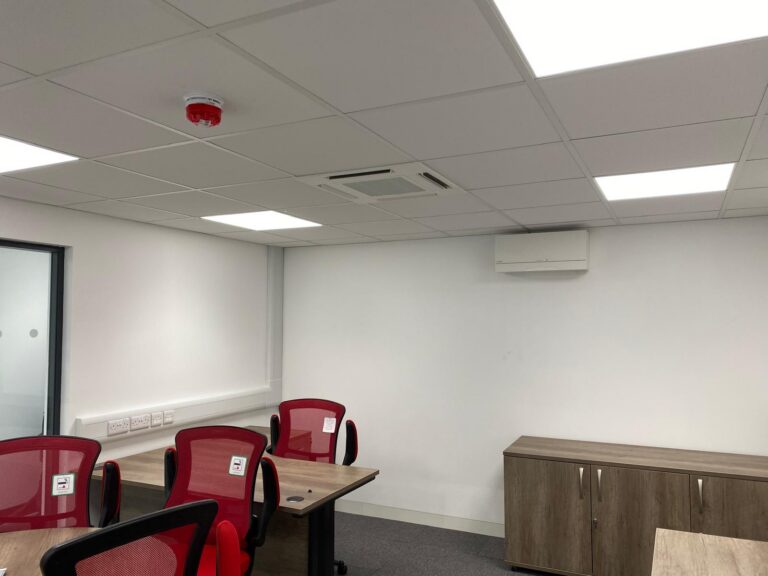
Every commercial/public building needs a fire alarm. It's legally required under fire safety legislation and insurance won't pay a claim if the system wasn't installed correctly. A good system detects fire fast (optical smoke detectors for offices, heat detectors for kitchens), alerts occupants instantly (sounders), and gives you visibility (local panel shows which zone detected fire).
System categories (BS 5839-1)
Category M (manual): Minimal automation, just call points and sounders. Rare, only for very small/low-risk. Category L: Automated detection on life-safety routes. Most offices, shops. Category P: Full building protection. Factory, warehouse, multi-floor. We assess your building and specify the right category.
Detection + notification
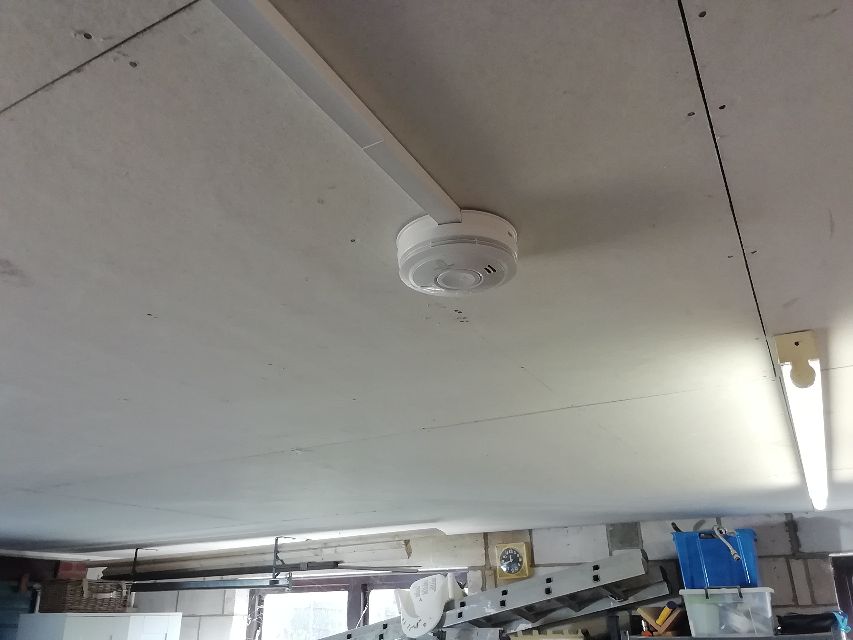
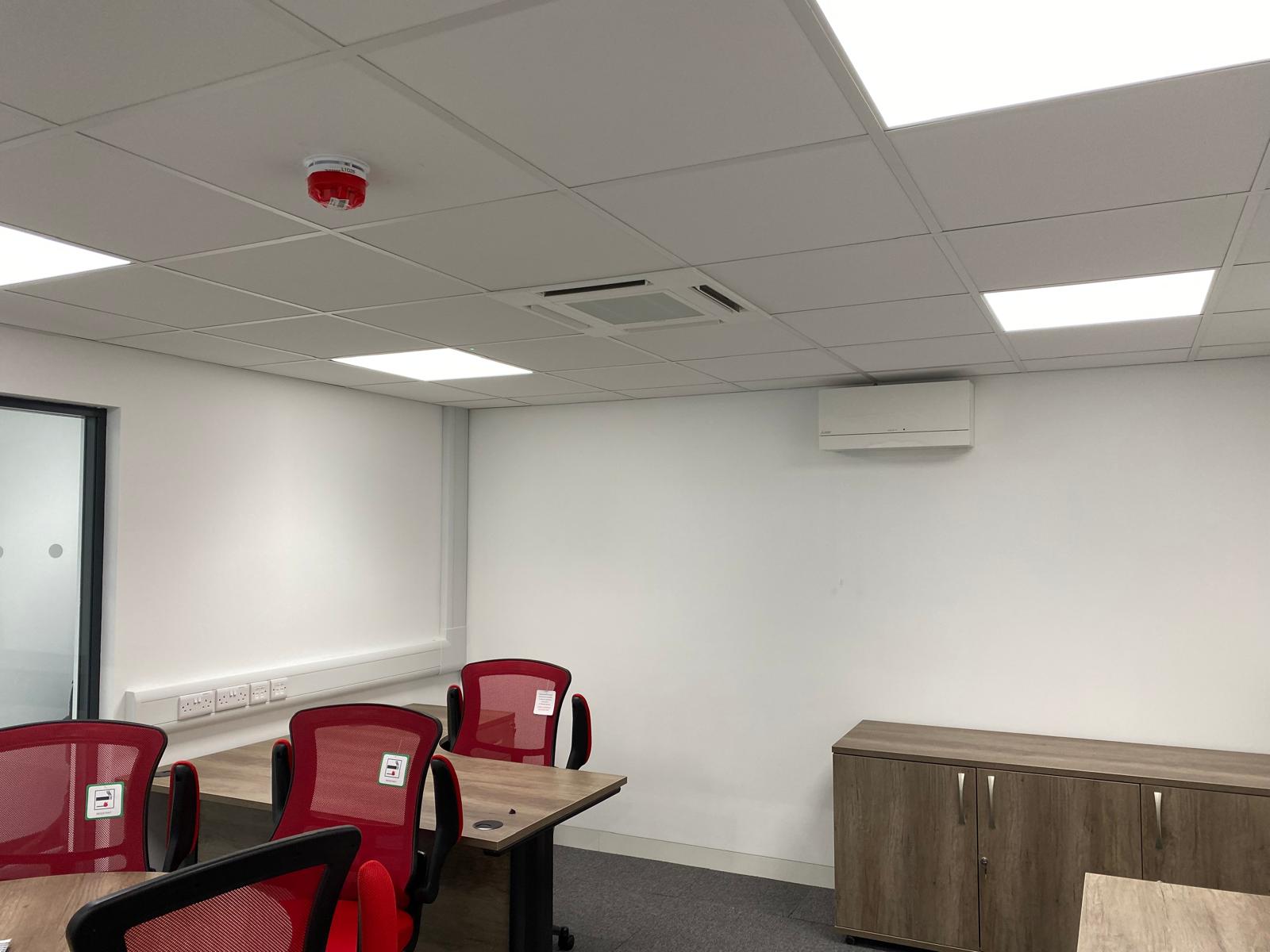
Optical smoke alarms for offices (detect smoke early, less prone to false alarms from cooking). Heat detectors for kitchens/garages. Sounders (alarms) alert occupants. A full system design covers all areas so any fire is caught and alarms reach everywhere simultaneously.
Detector selection: smoke, heat, and where each belongs
The commercial version of the same question, with more at stake. Optical smoke detectors go in escape routes, offices, corridors and storage — anywhere a smouldering fire is the likely start. Heat detectors go in kitchens, plant rooms, boiler rooms, workshops and loading bays, where smoke, steam, dust or exhaust are part of normal operation and a smoke head would be triggering weekly. Multi-sensor detectors combine optical and heat elements and weight them against each other, which makes them the sensible choice in areas that are genuinely mixed — a warehouse with a forklift running through it, or a bar with a kitchen open to the room. Beam detectors cover the large open volumes where point detection cannot see far enough, typically a high-bay warehouse or an atrium. Aspirating systems sample air continuously and are used where you need the earliest possible warning — comms rooms and server halls.
Getting the mix right is what keeps a system credible. A premises that has learned to ignore its own alarm because the kitchen sets it off twice a week is in a materially worse position than one with no alarm at all, because nobody moves when it counts.
Panel resets, silencing and reading a fault
Every commercial panel behaves slightly differently, but the sequence is the same, and knowing it saves an evacuation turning into a lost afternoon.
Silence the sounders first — that stops the noise without clearing the event, so the panel still shows you which zone or which addressable device started it. Read the zone or address before you touch anything else: on a conventional panel it narrows it to an area, on an addressable panel it names the exact detector, which is the difference between checking one head and checking forty. Investigate and clear the cause. Then reset — which returns the panel to normal and, importantly, will simply re-trigger if the cause is still present. A panel that resets and immediately alarms again is telling you the problem is real, or that the head is contaminated or failed.
Fault conditions are not fire conditions and people routinely confuse the two. A steady fault buzzer usually means an open or short on a detection zone, a battery fault, a charger fault, or a sounder circuit gone open — often a device that was disturbed by other trades working in the ceiling. It needs attention, but it is not an evacuation.
Panels should only be reset by someone nominated and trained for it, and that training is part of every system we hand over. We also attend as a call-out where a system is repeatedly triggering, cannot be reset, or is sitting in fault — including systems we did not install. Very often the answer is a single contaminated head, a detector knocked out of its base, or an end-of-line resistor that a previous contractor removed and never replaced.
False alarms, and why the fire service cares
Unwanted fire signals are a real cost — to you in disruption and lost trading, and to the fire service in wasted attendances. Norfolk, like most services, takes a dim view of repeat offenders and can and does start charging. The fixes are almost always the same: put heat or multi-sensor detection where smoke detection was never appropriate, move heads away from doorways and air handling outlets, isolate zones properly before contractors work in a ceiling, and get the system serviced so contaminated heads are replaced before they start crying wolf. We handle all of that, and we will tell you plainly when a system needs re-designing rather than re-setting.
Installation and compliance
What a system costs depends on the size of the premises and the category it has to meet — a small unit on an L5 and a multi-floor building on an L1 are different orders of job. Installation typically takes 2–4 days. Maintenance is monthly manual checks plus an annual professional test, and we can carry out both on a service contract.