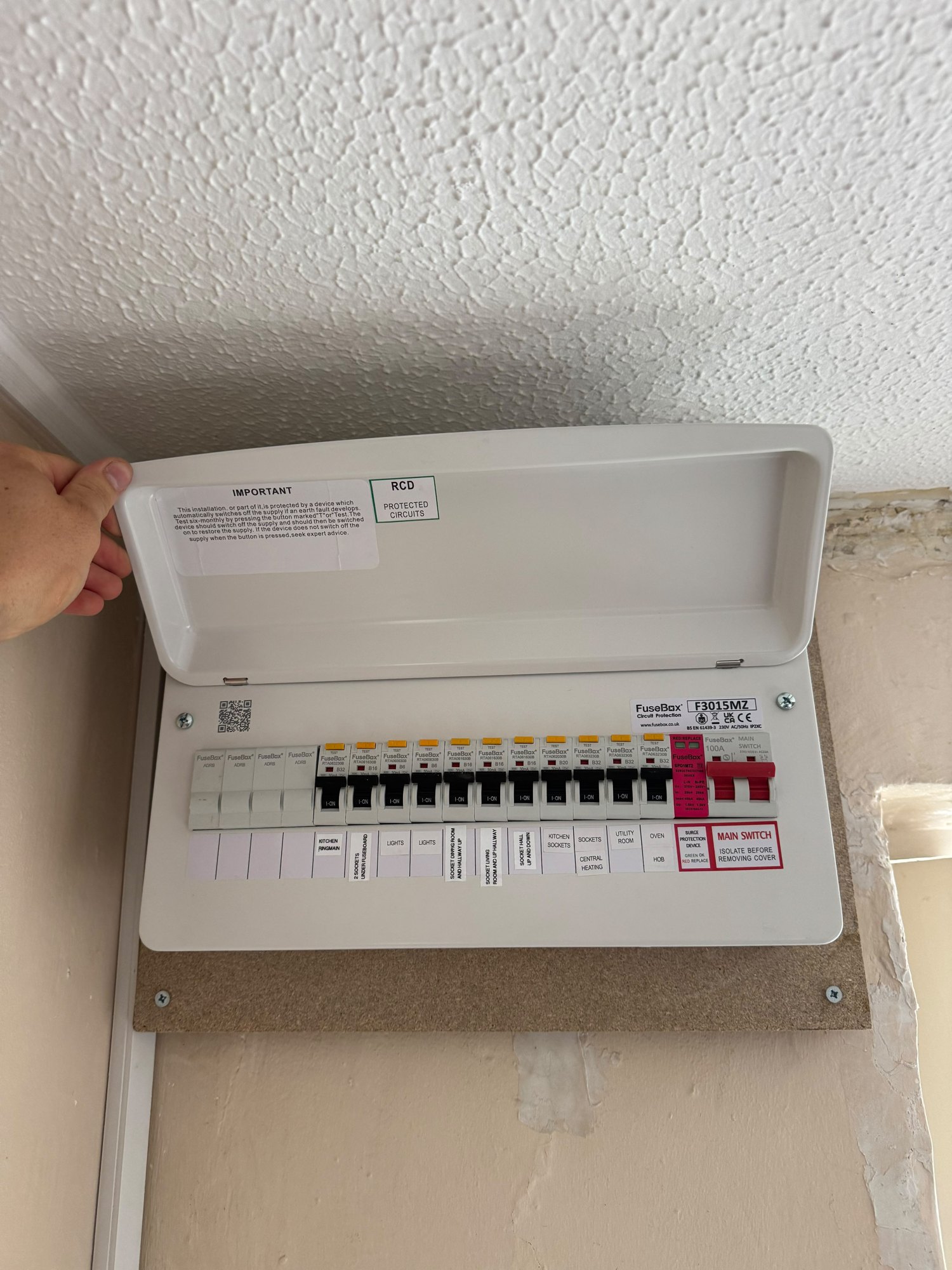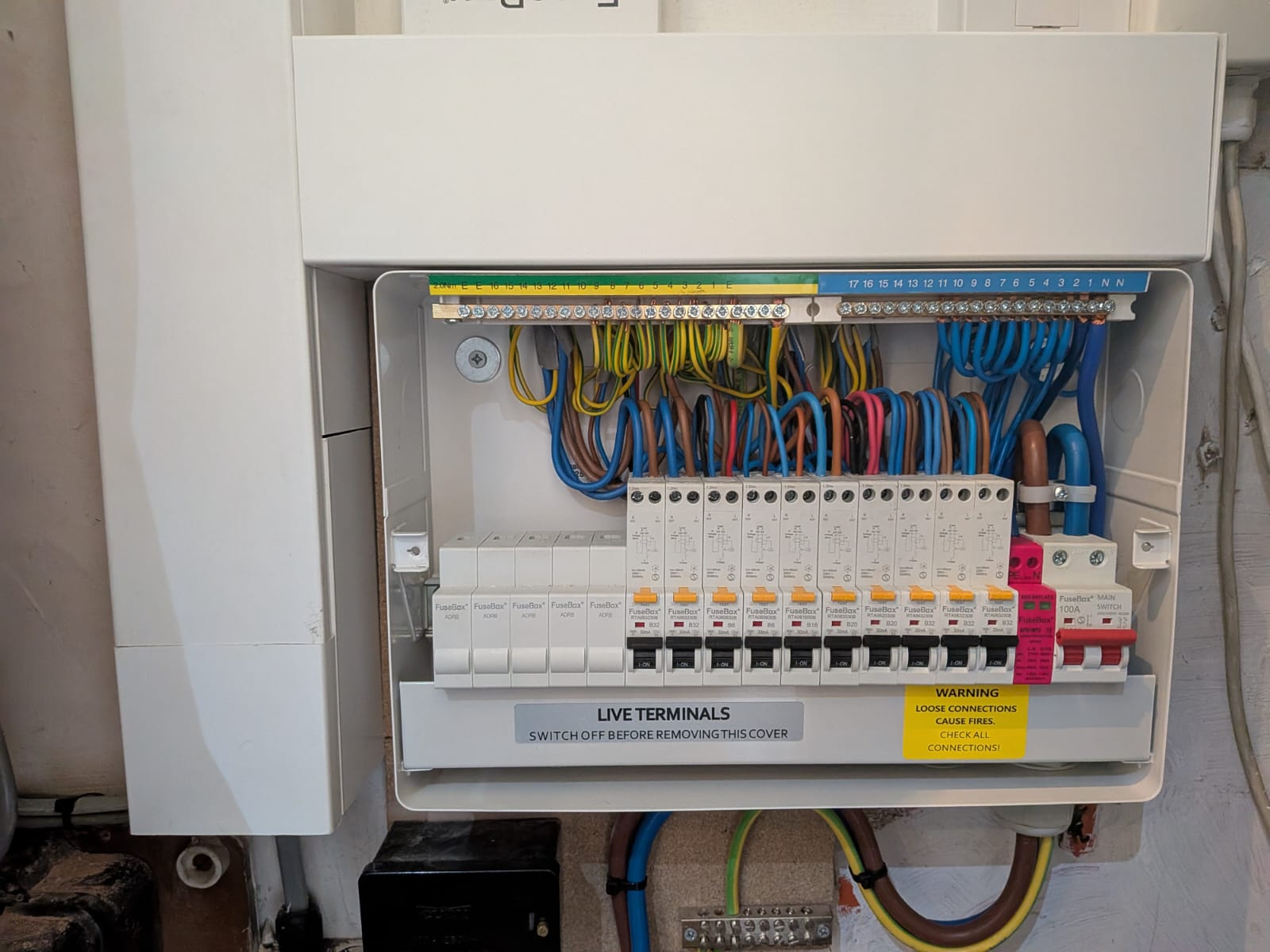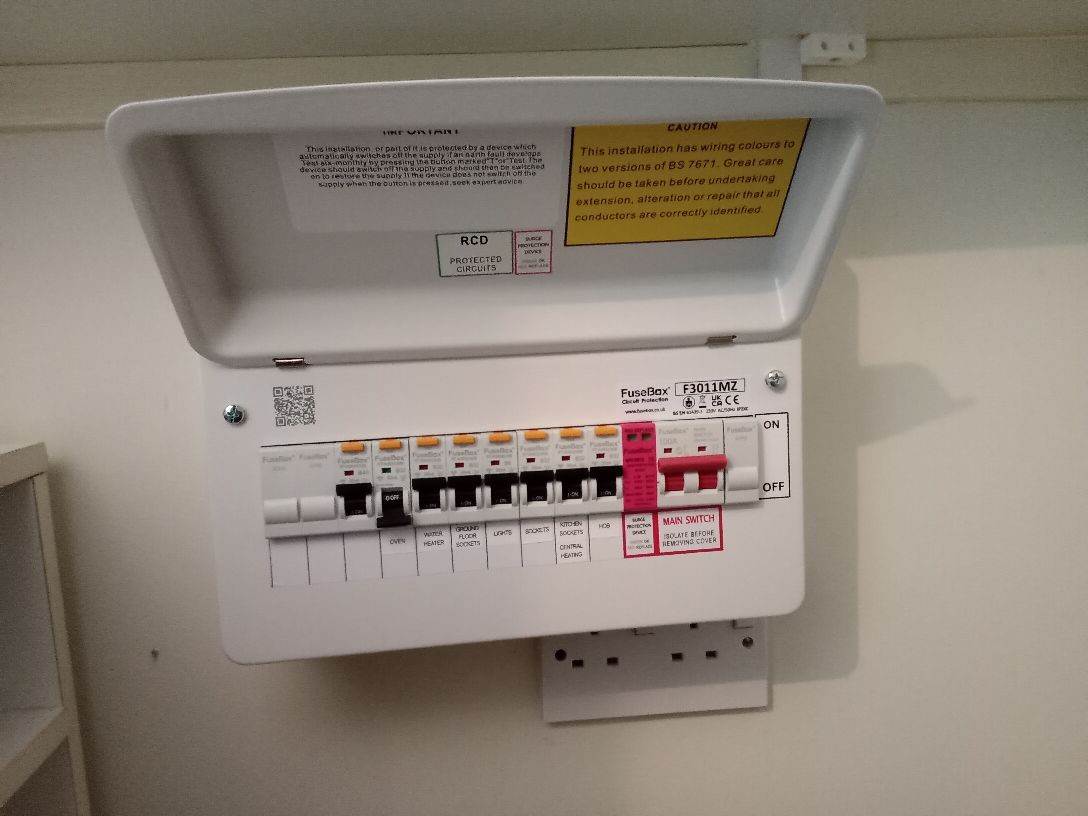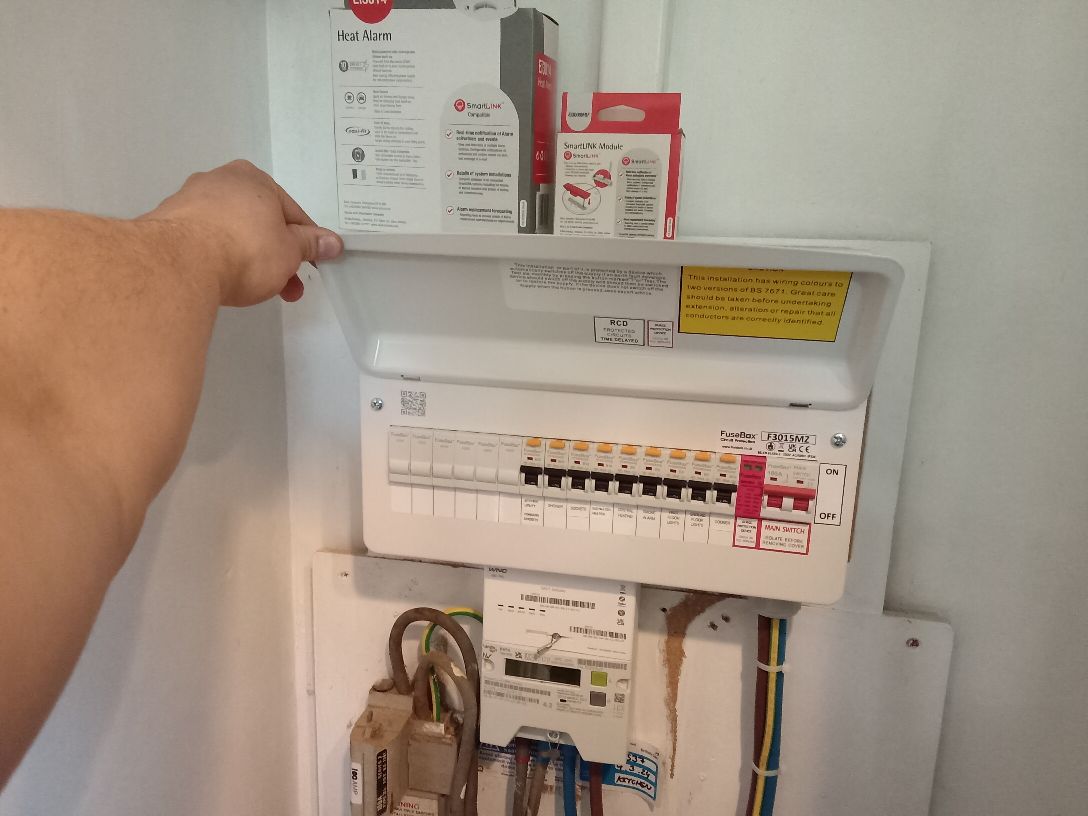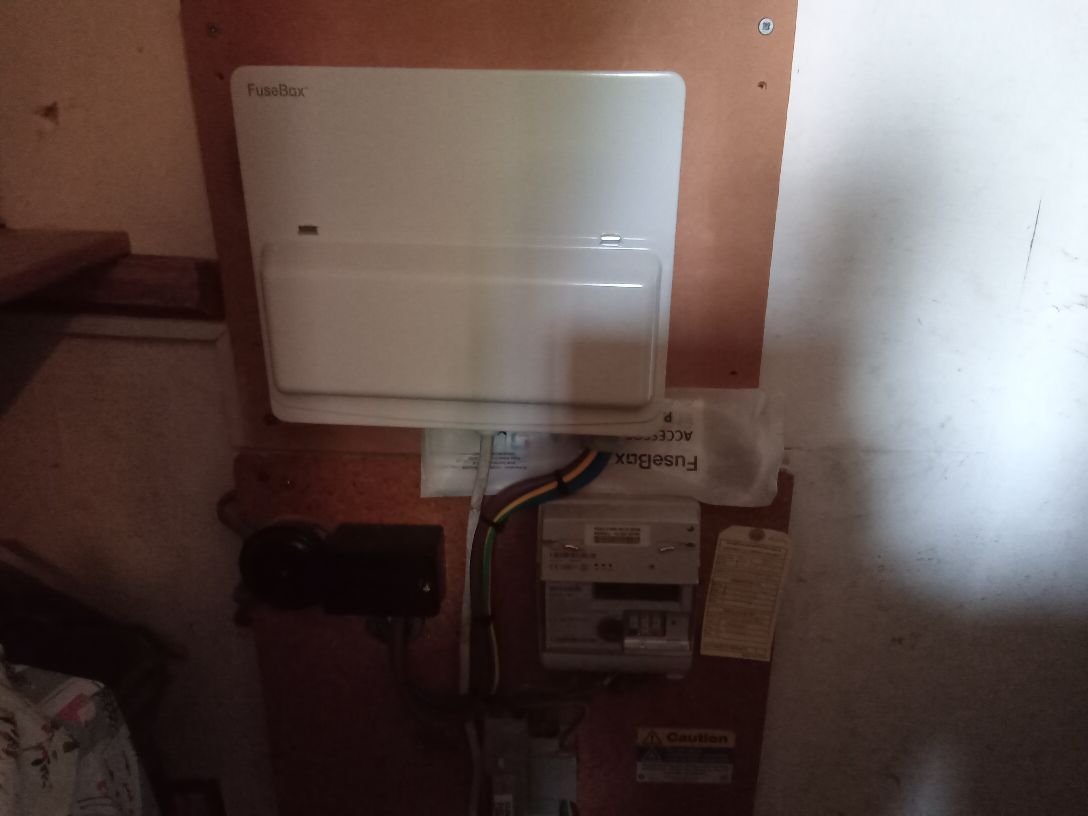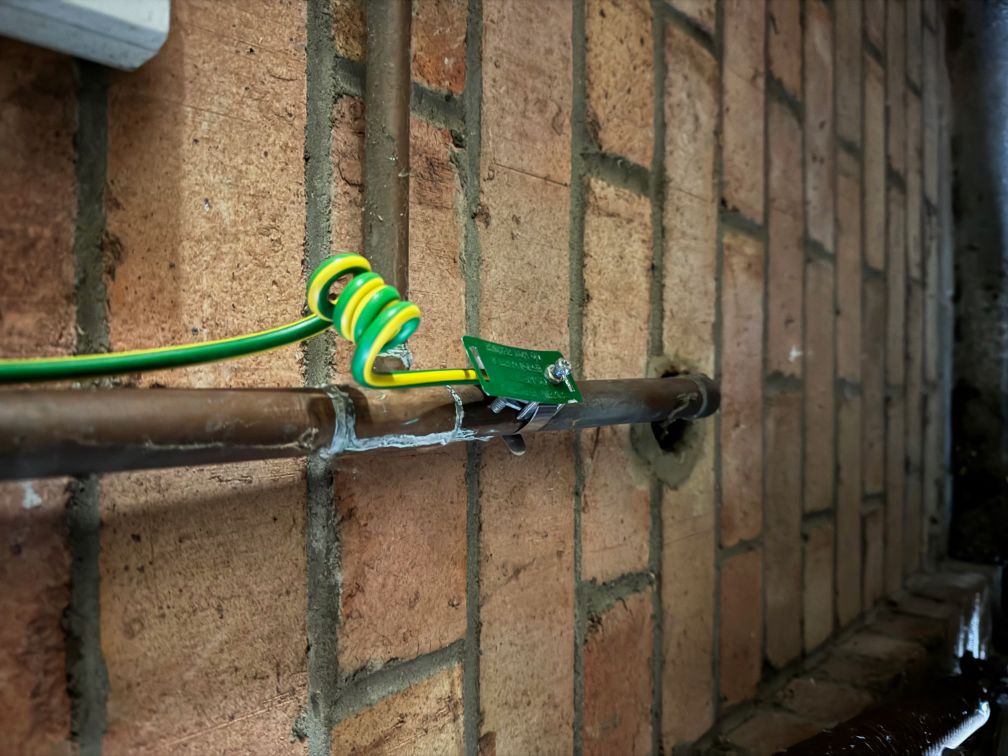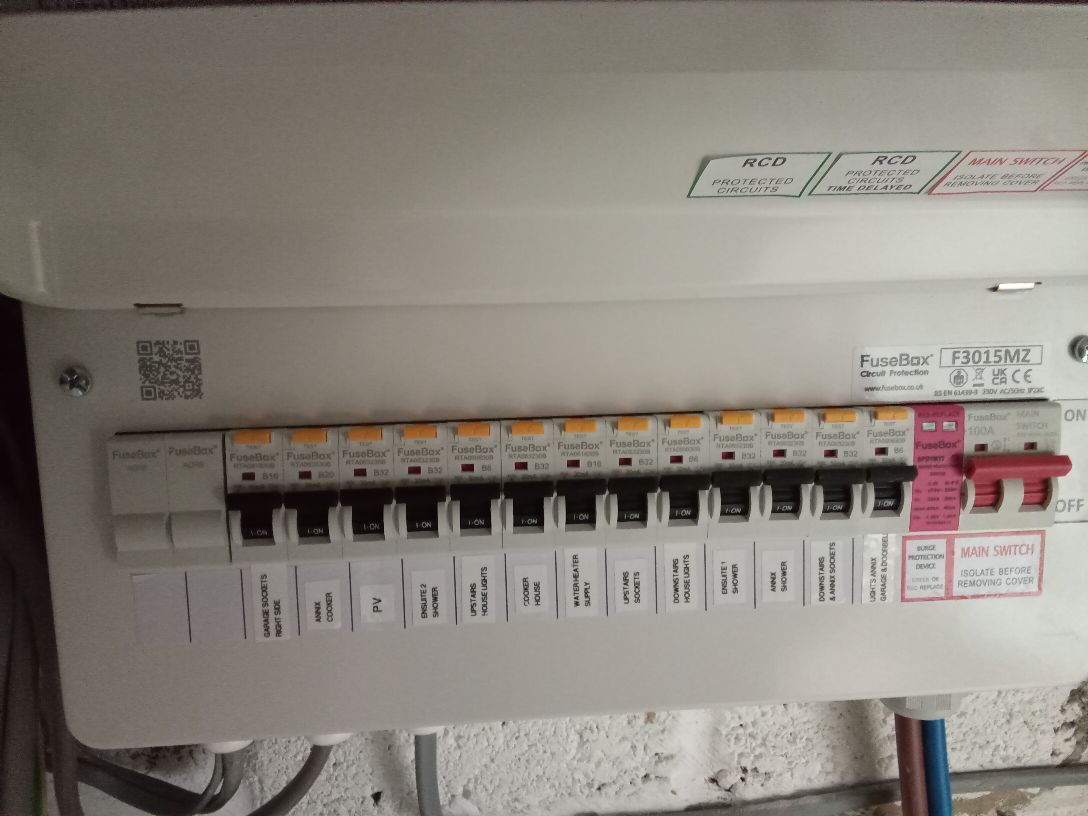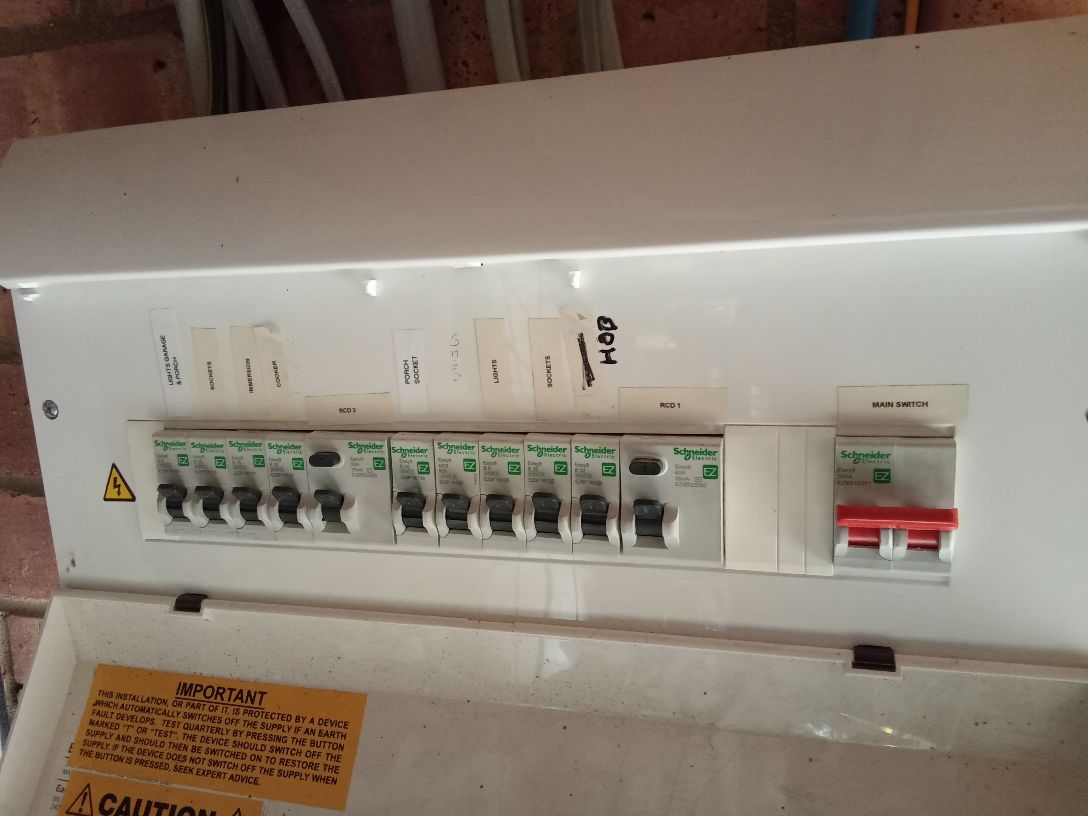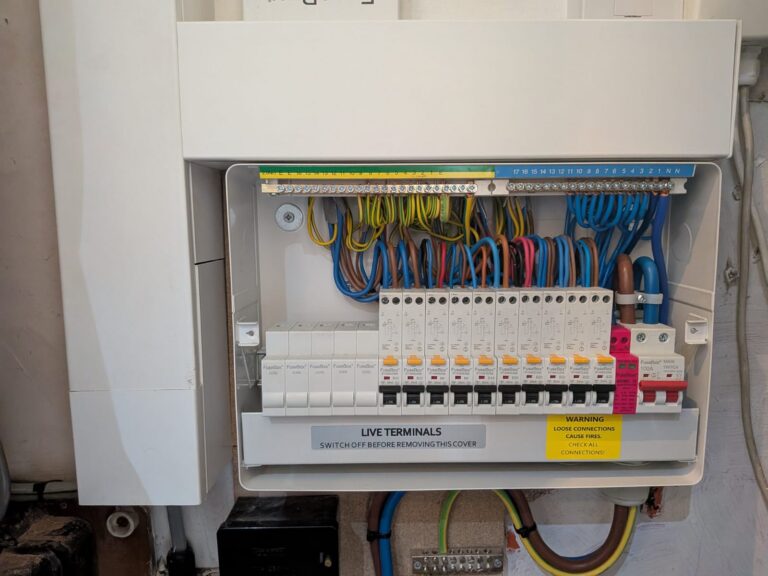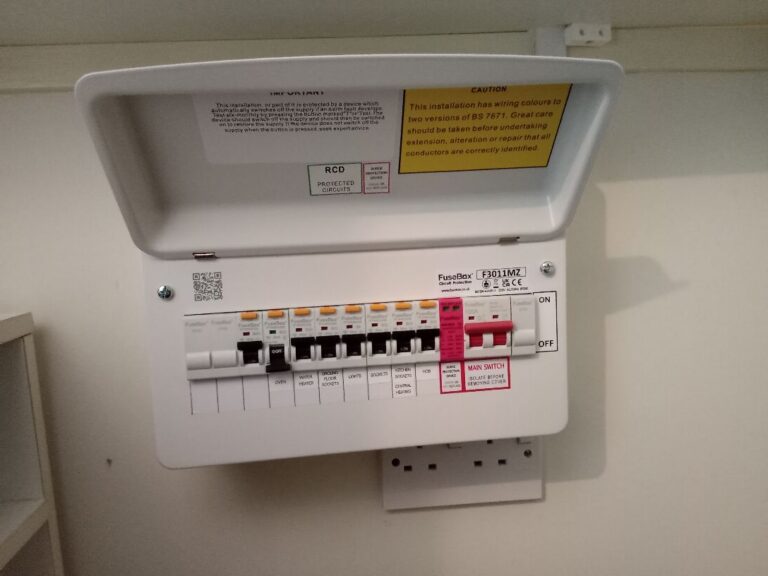
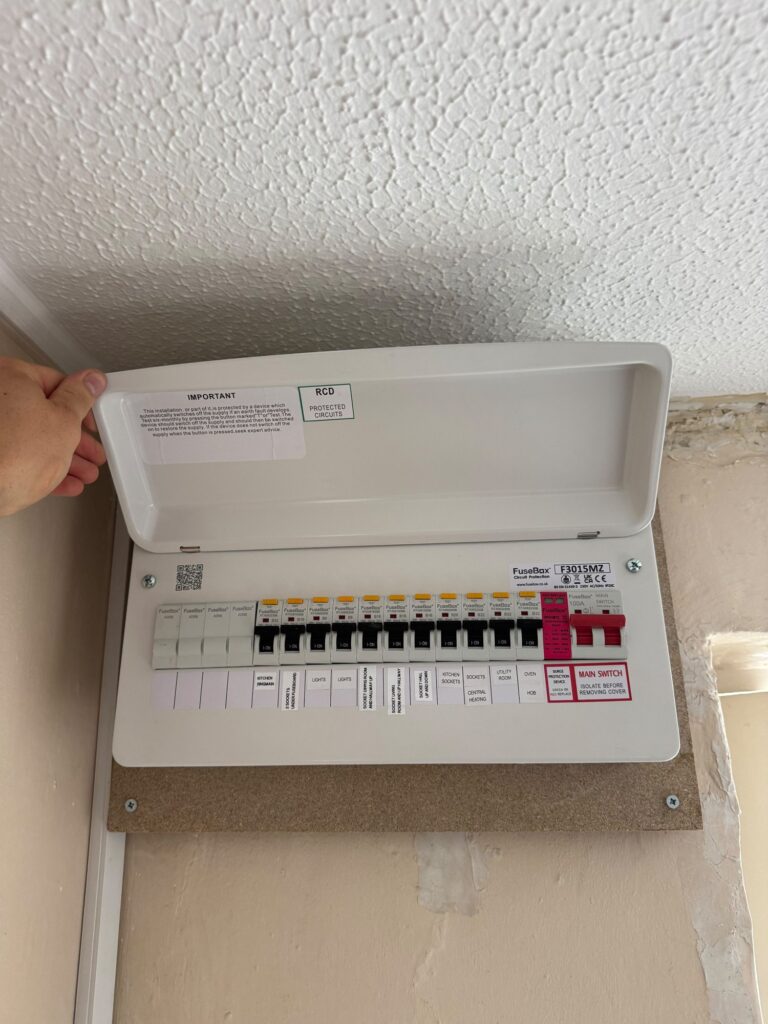
An old fuse board could be putting your home at risk. We replace tired consumer units with modern boards featuring individual RCBO protection — better safety, fewer nuisance trips and full compliance with current regulations.
Why your old board needs upgrading (and soon)
The consumer unit is the gate-keeper of your electrical system — if it fails, nothing works. More critically, if something *should* fail (a fault, a short circuit), the board's protection devices have to disconnect the power in milliseconds or you risk electrocution or fire. Older boards with rewireable fuses were designed decades ago for lower power loads and without the RCD (residual current device) protection that's been law since 2008. An EICR that flags your board as C1 or C2 means you have a genuine hazard — we've seen homes where the old fuse board simply won't trip when it should, leaving a live fault unprotected.
What a modern board provides
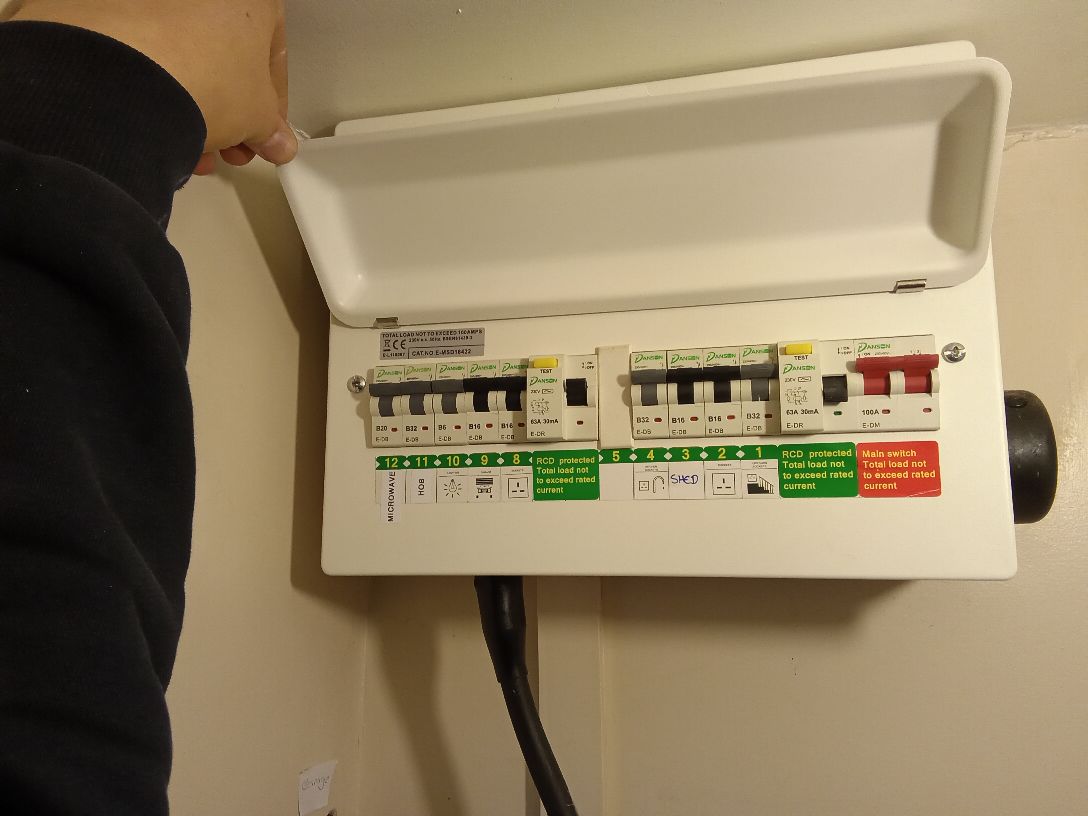
A new board has individual RCBOs (residual current breakers with overcurrent protection) — one per circuit — so a fault on the kitchen circuit doesn't kill the heating or lighting. You get surge protection devices (SPDs) that protect TVs, computers and phone chargers from spikes. Everything is clearly labelled so any electrician can immediately see what each circuit does. And the board is made of metal (non-combustible) rather than plastic, meeting current BS 7671 and Building Regulations.
The replacement process
A typical board upgrade takes one working day. We isolate the supply (about 30 minutes), disconnect the old board, fit the new one, reconnect every circuit carefully (this takes time and must be done right — one wrong connection can damage appliances), test each circuit, and issue a full Electrical Installation Certificate. You'll be without power for a couple of hours total, and we arrange this for a convenient time. The work is notified under Building Regulations, so you have documentation for insurance and future house sales.
What influences the quote
A straightforward swap for a standard 100A board is the simplest version of this job. It costs more if you need higher capacity — 125A or 200A for an EV charger or a heat pump — if the existing wiring turns out to be faulty and has to be put right first, or if the board sits somewhere awkward: buried in a cupboard, or on an external wall that has to be cut into. We look at all of that before quoting, then give you one fixed price. No surprises, and no hourly ambiguity.
Future-proofing
A new board isn't just about safety — it's about flexibility. EV chargers, solar panels, air-source heat pumps, and electric heating all need a modern, properly-sized board. By upgrading now, you're preparing your home for the next decade of upgrades without needing *another* board change. The spare capacity is an investment in your own future options.
When to upgrade
If your EICR shows any C1 items involving the board, upgrade immediately — it's a safety hazard. C2 items give you 3 months. If there's no EICR yet, any home older than 20 years with original electrics is worth having assessed. Once you're planning other electrical work (rewire, EV charger, solar), upgrading the board at the same time makes sense — economies of scale, combined testing, and everything is modern together.