Efficient, controllable electric heating — from individual radiators to underfloor systems and smart thermostats — installed and wired correctly for comfort and economy.
When electric heating makes sense (and when it doesn't)
Electric heating gets a bad reputation (old night storage heaters were expensive and inconvenient), but modern systems are genuinely efficient, controllable, and economical in specific situations: homes off the gas grid, extensions where running pipes is impractical, flats in blocks without central heating, garage conversions, or whole-home systems in well-insulated properties. For a large, poorly-insulated Victorian semi, gas central heating is usually better. For a new build or retrofit with good insulation, electric is competitive and often cheaper to install.
Types of electric heating
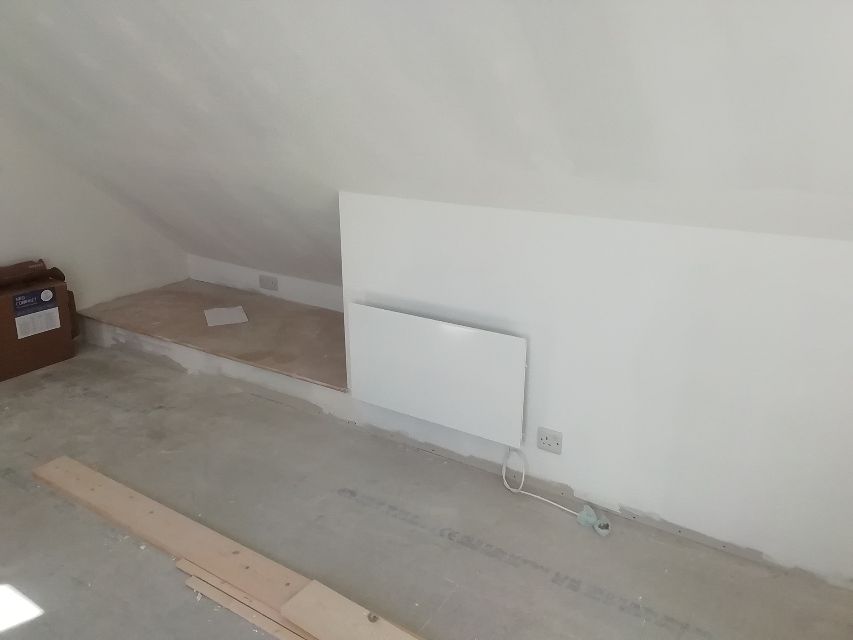
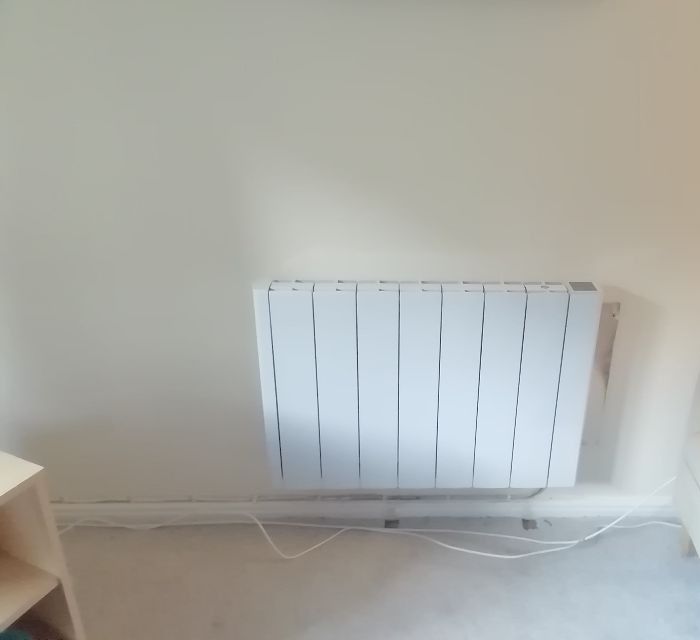
Electric radiators: Look and work like traditional radiators but plug in (or hardwired). Excellent for single rooms, extensions, or zone control, and they warm a room in 10–20 minutes. Underfloor heating: Cables or mats embedded in screed under flooring, mostly used in bathrooms or whole open-plan ground floors. The most involved of the options to install, but it creates even, comfortable warmth. Panel heaters: Thin, wall-mounted heaters that look modern. Good for tight spaces. Smart thermostats: Allow you to schedule heating by room, set different temps for different times, and control via app — the real money-saver, since you never heat a room you're not using.
We fit ATC electric radiators
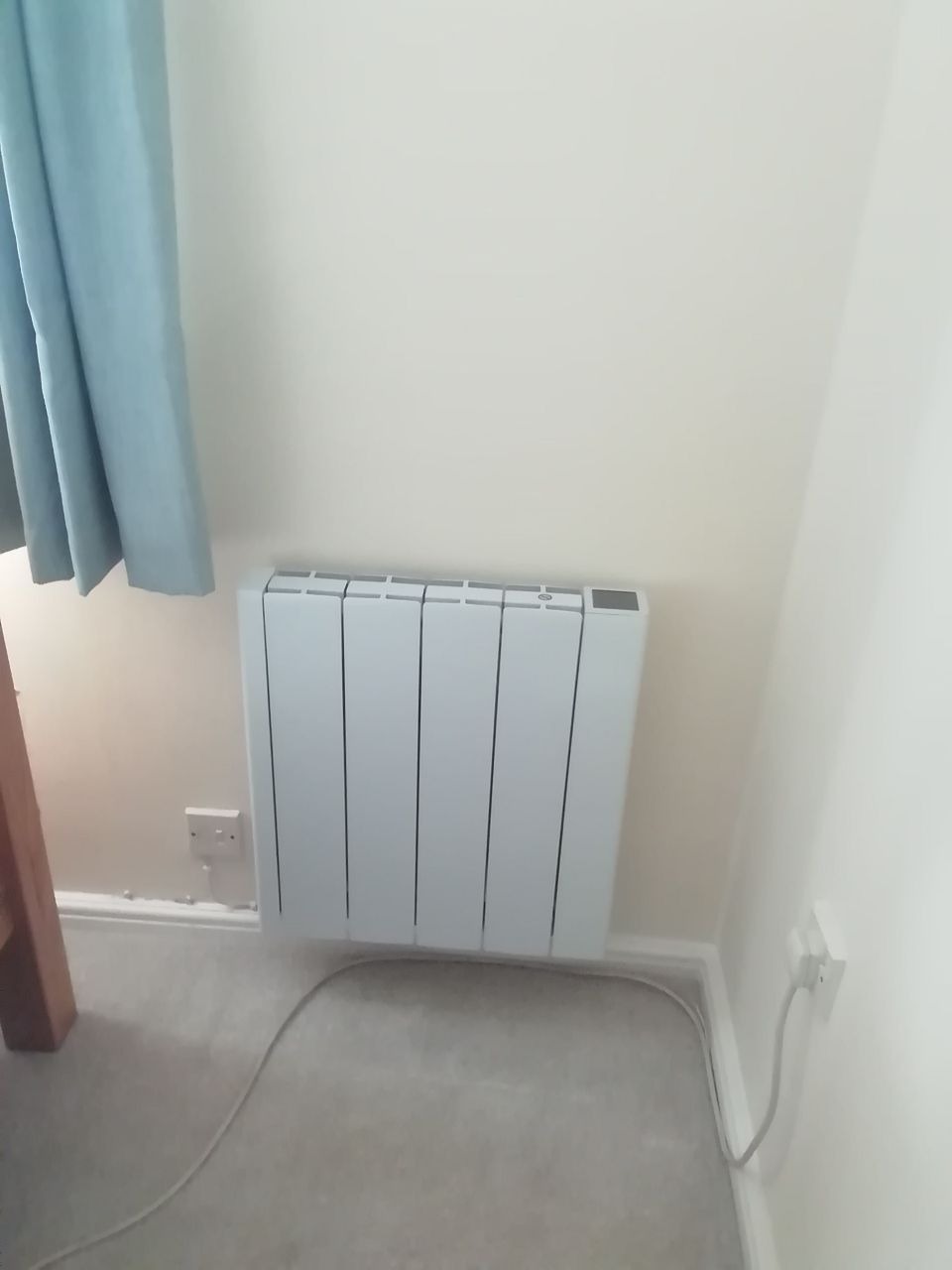
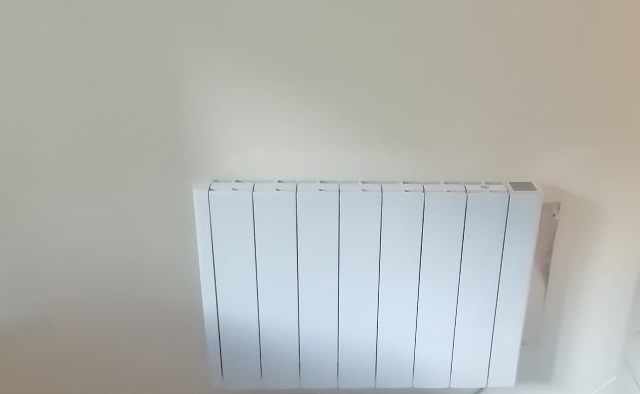
ATC is the range we install most, and it is worth understanding why, because the gap between a cheap panel heater and a proper electric radiator is mostly about control rather than heat output. Every heater turns electricity into warmth at essentially 100% efficiency — a kilowatt in is a kilowatt of heat out, whatever the badge on the front. What separates them is how accurately they hold a room at the temperature you asked for, because every degree of overshoot is money you did not need to spend.
The ATC thermal radiators use PID intelligent control paired with a Triac electronic thermostat, which holds the room to within about 0.2°C of the set point rather than the crude overshoot-and-coast cycle you get from a basic bimetallic stat. In practice that means no cold dip before it kicks back in, and no wasted run-on past the temperature you actually wanted.
The range covers most situations we come across: the Sun Ray RF and Almeria ECO WiFi for app and smart-home control, the iLifestyle for general living spaces, the Neptune RF where wall depth is tight, the Varena where a straightforward programmable radiator is all that is wanted, and Pacific RF towel radiators for bathrooms. We will talk through which suits each room rather than fitting the same unit throughout out of habit.
Why it needs an electrician, not a handyman
ATC's own installation instructions are explicit that the electrical work must be carried out by a qualified electrician, and there is good reason for it. Some of the range plugs into an existing socket and some is hardwired to a fused spur, but either way the circuit behind it has to be up to the job — correctly rated, properly protected, and not simply the nearest socket ring asked to carry a load it was never designed for. Heat a whole house electrically and you add a serious sustained load to the installation, which often means the consumer unit and the incoming supply need looking at before a single radiator goes on a wall. We check that first and tell you honestly what the property will take.
Where you want a permanent, tidy installation we hardwire the radiators to a fused spur so there is no flex across the floor and nothing to unplug by accident. Where a plug-in unit suits the room better we will say so rather than sell you work you do not need. Either way, each room is independently controlled and everything is tested and certified on completion, notified under Building Regulations where it applies.
Running it, and how it compares to gas
A single radiator in one room and a whole-home system with radiators everywhere, smart controls and circuit upgrades are very different jobs, and we quote each on what it actually needs. On running it: a unit of electricity is dearer than a unit of gas, so per unit of heat electric is the more expensive fuel. The honest comparison is more complicated than that, though — gas loses heat up chimneys and through pipework, while electric heat is delivered where you asked for it, and a modern electric system in a well-insulated house can come out close to gas in practice. If you are heating from scratch, a heat pump is more efficient again than resistive electric heating and worth putting on the list.
Installation and control
Radiators can be plugged into an existing socket or hardwired to a fused spur; hardwiring is neater and means no flex across the floor, and it is what we would usually recommend for a permanent installation. Each room can have its own thermostat or a whole-home smart system. Load management is important — a house running 6 radiators simultaneously draws significant current, so we size circuits appropriately and sometimes add load-limiting devices so everything runs smoothly.
Best for
Extensions (easier than running pipes), flats (no access to communal boilers), garage conversions (heating needs are modest), homes off the gas grid, or as a top-up to existing heating (a radiator in a cold bedroom is easier than adjusting the whole house thermostat).