Solar panels have become genuinely affordable. They also genuinely work—even in the UK’s unpredictable weather. If you’ve been on the fence, the numbers might surprise you.
The maths: what does a typical 4kW system actually do?
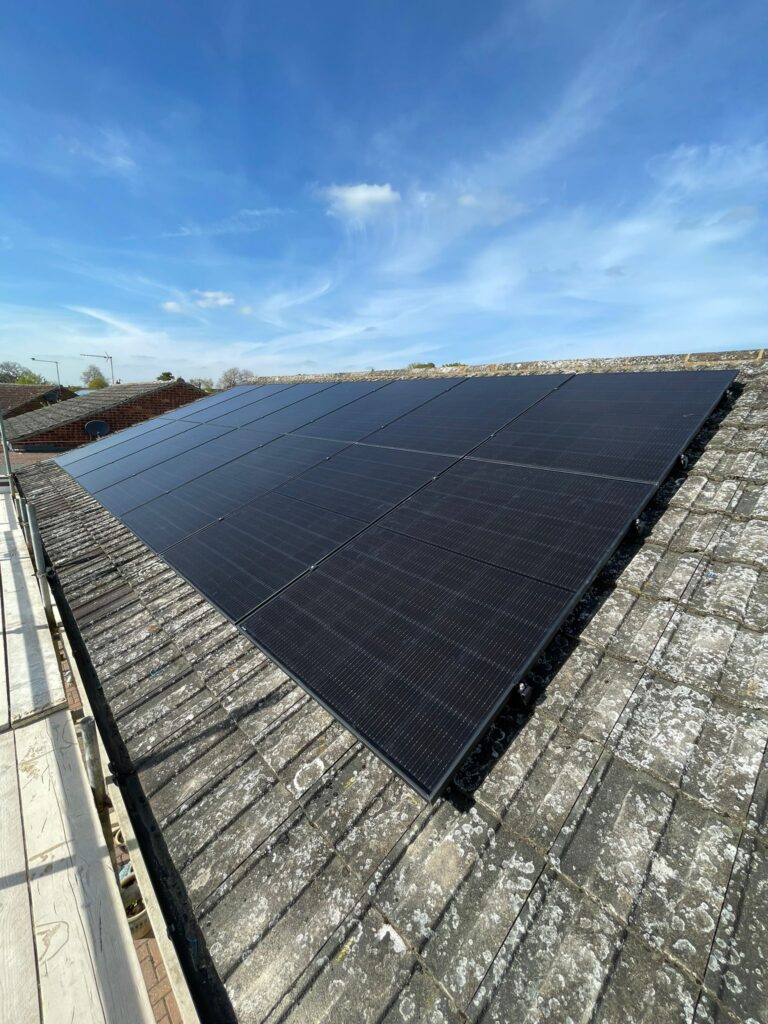
A 4kW roof-mounted array suits a typical 3-bedroom house. Here is what it generates, and where the value lands:
- Annual generation: ~3,500 kWh per year (UK average).
- Self-consumption: around half of it — roughly 1,750 kWh a year used directly in the house, replacing electricity you would otherwise have bought.
- Export: the other half goes to the grid, and your supplier pays you for it under the Smart Export Guarantee.
- Between the two, a 4kW array typically covers a substantial slice of a household’s annual electricity.
Payback: how long to break even?
On current electricity prices, payback normally lands inside the first decade. That sounds long until you realise:
- Solar panels last 25+ years (warranty is usually 25 years).
- After payback, you get 16+ years of free power.
- Electricity costs rise ~6–8% per year on average, so your savings grow.
- ROI compounds—not linear.
How the return builds over time
If electricity inflation is 7% per year (historical trend), your savings double every 10 years:
- Years 0–10: the system is paying for itself.
- Years 10–19: electricity has inflated, so the same generation is worth appreciably more each year.
- Years 20–25: the panels are still producing close to 90% of their original output, against a much higher grid price.
- Over 25 years the cumulative value comfortably exceeds the original investment several times over.
- Which is a rate of return most conventional savings cannot match, and one that rises every time electricity does.
Battery storage: Is it worth it?
A 10kWh battery is a further investment on top of the array, and it pays back more slowly than the panels do — typically 10–15 years. What it buys you is the ability to use your own daytime generation in the evening instead of exporting it cheaply. Worth it if:
- You’re home during the day (shift work, retired, remote).
- You have high evening consumption (EV charger, heating).
- You want energy independence (fear of grid outages).
Otherwise, focus on panels and buy grid power when needed.
Government support: Is there any left?
The Feed-in Tariff ended in 2019. The Smart Export Guarantee (SEG) lets you sell surplus power back to your supplier — rates vary quite a bit between suppliers, so shop around. No direct grants remain, but some councils offer interest-free loans.
Maintenance: What does it involve?
Solar is nearly maintenance-free. Annual checks include:
- Visual inspection (look for damage, debris).
- Inverter check (converts DC to AC).
- Monitoring software (track generation).
An annual service is a modest recurring cost against the value the system produces, and most arrays run twenty years or more without needing a repair.
Bottom line: A 4kW system pays for itself in 8–9 years, generates 25+ years of value, and is nearly maintenance-free. If your roof gets decent sun and you plan to stay in the house 10+ years, it’s a smart investment.