Stay compliant and keep people safe with emergency lighting designed, installed and tested to the relevant standards — including certification and ongoing testing.
Emergency lighting: legal requirement, life-saver
If your building loses power during operating hours, people must be able to find exits and navigate to safety in seconds — not minutes. Emergency lighting is a legal requirement for offices, retail, hospitals, schools, and any public/multi-occupant building. Non-compliance can void insurance and expose you to prosecution if anyone's hurt during an outage.
Design and positioning
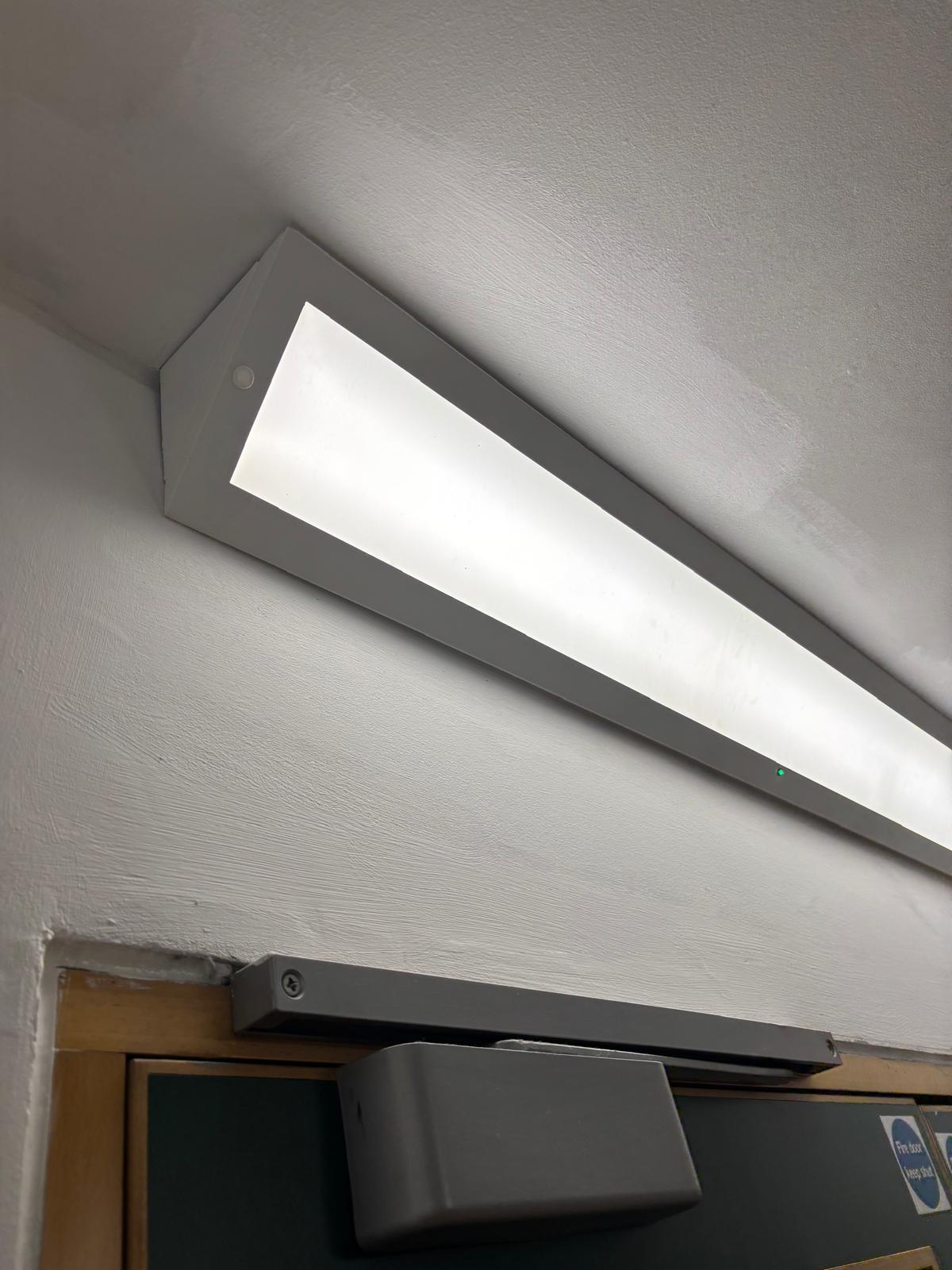
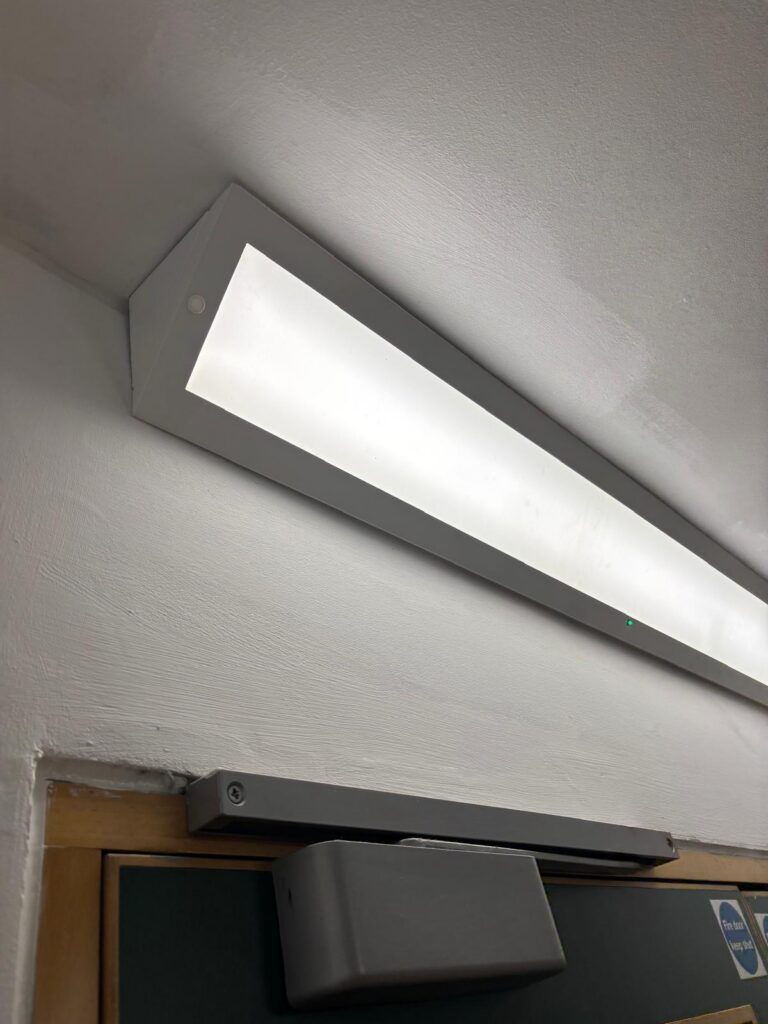
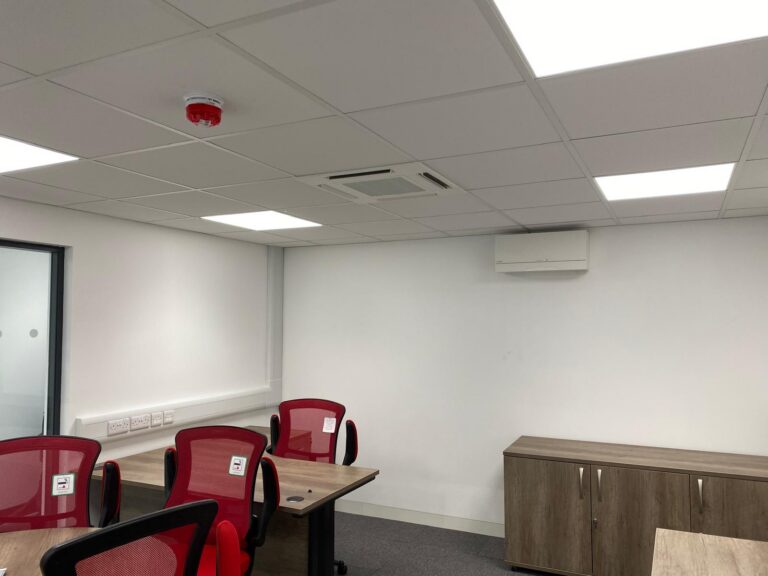
Every exit route must be lit (every meter along the path). Open areas must have ambient lighting. High-risk task areas (machinery, medical, electrical rooms) need backup light. We assess your layout, design coverage to BS 5266, and position luminaires so they're actually useful (not glowing uselessly in storage closets).
Mains-powered with battery backup
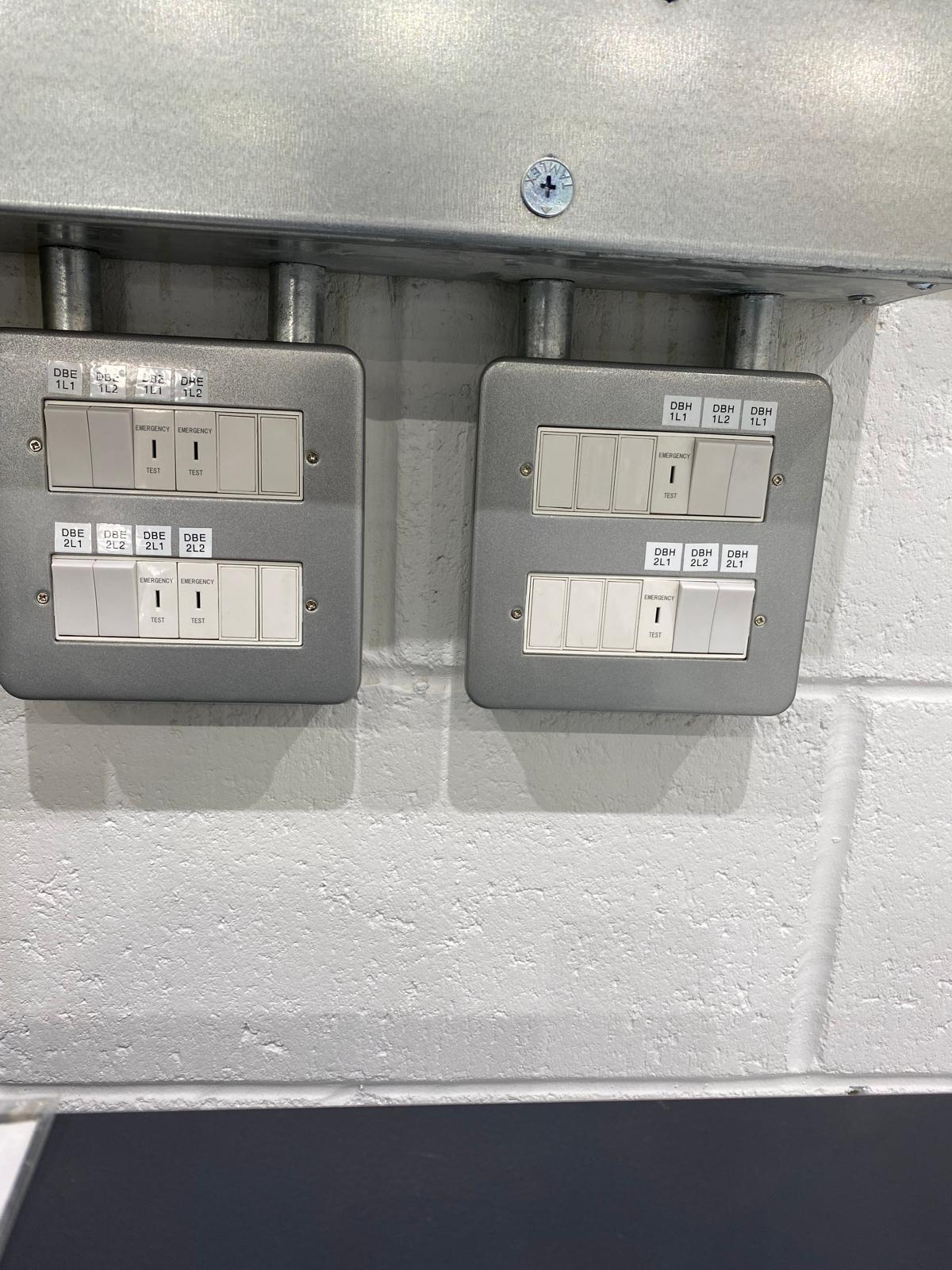
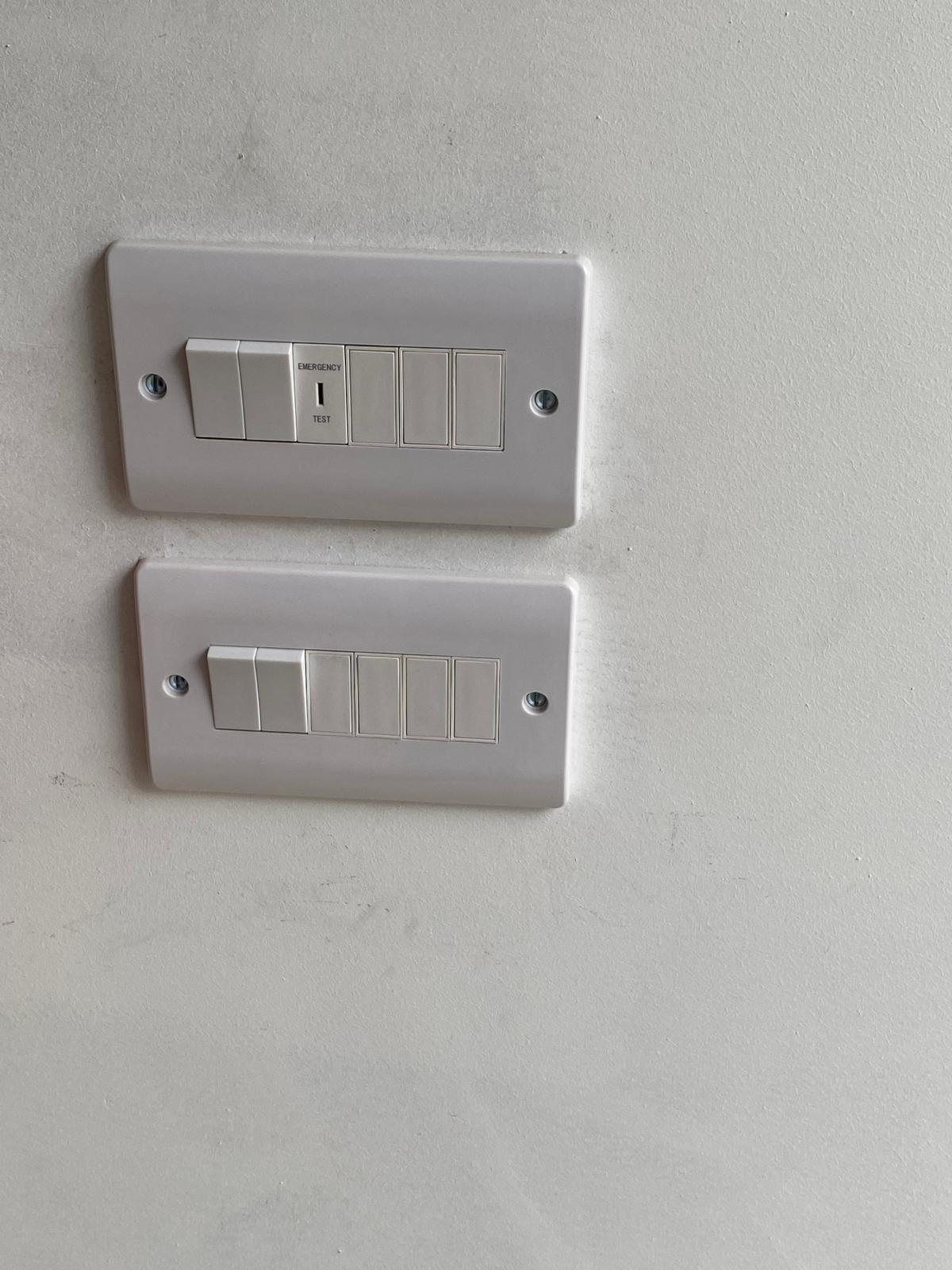
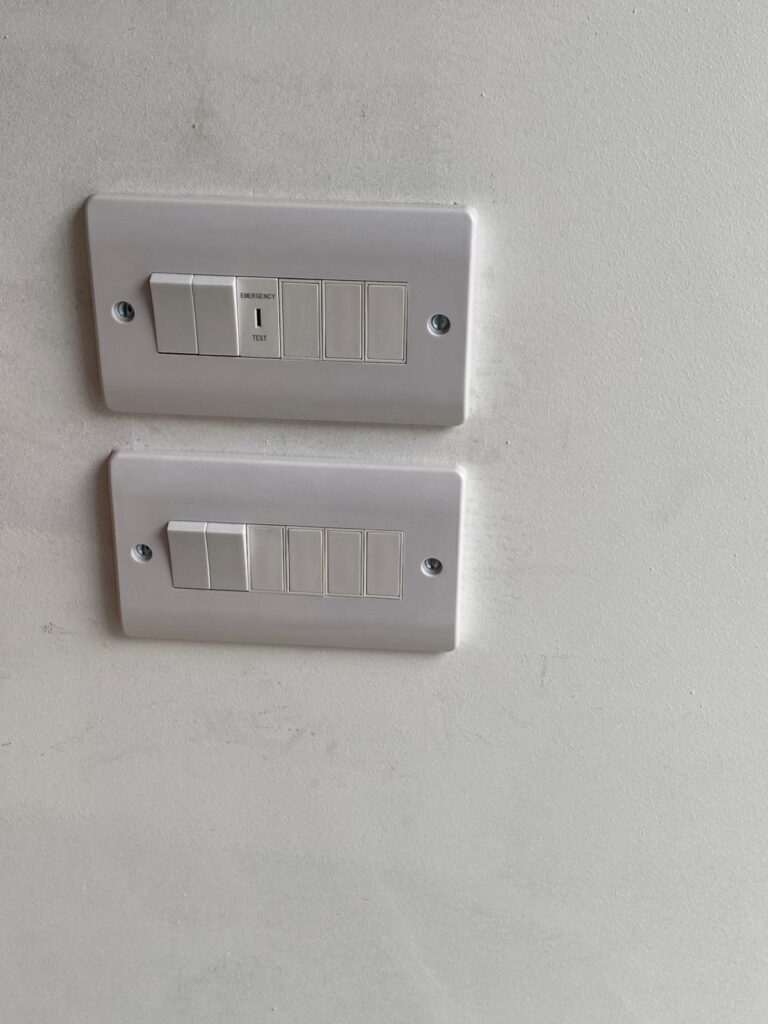
Emergency lights run on mains power normally. If mains fails, a battery instantly powers them — giving 1–3 hours of evacuation lighting. Self-test systems automatically carry out monthly checks (you just press a button), then run a full 3-hour annual test to confirm everything actually works. This beats manual testing every month.
Scope and installation
A small building of ten to fifteen fittings is a straightforward install; a larger building with complex escape routes needs a proper design against BS 5266 and is priced accordingly. We also offer the annual duration test as a service if you would rather not run it in-house — it is a legal requirement and it is the one that most often gets missed.