Finding the right electrician matters. Bad work can cause fires, electric shocks, and expensive repairs. Here’s what every homeowner should know before booking an appointment.
1. Verify qualifications: NICEIC, Part P, and certification
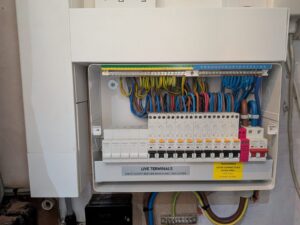
The UK’s gold standard is a NICEIC Approved Contractor status — it means the electrician has passed rigorous testing, follows current wiring standards (18th Edition), and their work is independently inspected. Part P certification proves they’re registered to do Building Regulations work. If they can’t show these, ask why.
Any electrician working in England must be registered under Building Regulations for certain work (rewires, new circuits, fuse board work). Unregistered electricians may be cheaper, but you’re liable if something goes wrong.
2. Check the public liability insurance
Insurance protects you if something goes wrong. A legitimate electrician carries substantial public liability cover — it pays out for damage to your property, or if someone gets hurt — and the better firms carry considerably more than the minimum. Ask to see the certificate. It takes thirty seconds and saves you months of hassle if there is ever an accident.
3. Get a fixed price, not an estimate
A fixed-price quote means the electrician has assessed the job, understood what’s needed, and committed to a price. An “estimate” is a guess and can double when they discover asbestos, old wiring, or unexpected complications. Always ask: is this a fixed price or an estimate?
4. Check reviews on Google and Trustpilot
Read recent reviews (last 6 months matter most). Look for patterns: do customers mention punctuality, tidiness, and follow-up? Ignore isolated 1-star reviews—focus on the trend. A 4.8-star rating across 50+ reviews is far more telling than a 5-star rating from 3 reviews.
5. Red flags to avoid
- No quote in writing. Get it via email or text.
- Insists on cash only. Suggests they’re dodging tax or insurance.
- Refuses to show qualifications or insurance. Walk away.
- Quotes significantly lower than others. They’re either rushing the job or cutting corners.
- Wants a large deposit up front. Standard is 10–25% for big jobs, none for small repairs.
6. Ask what certification you’ll be given
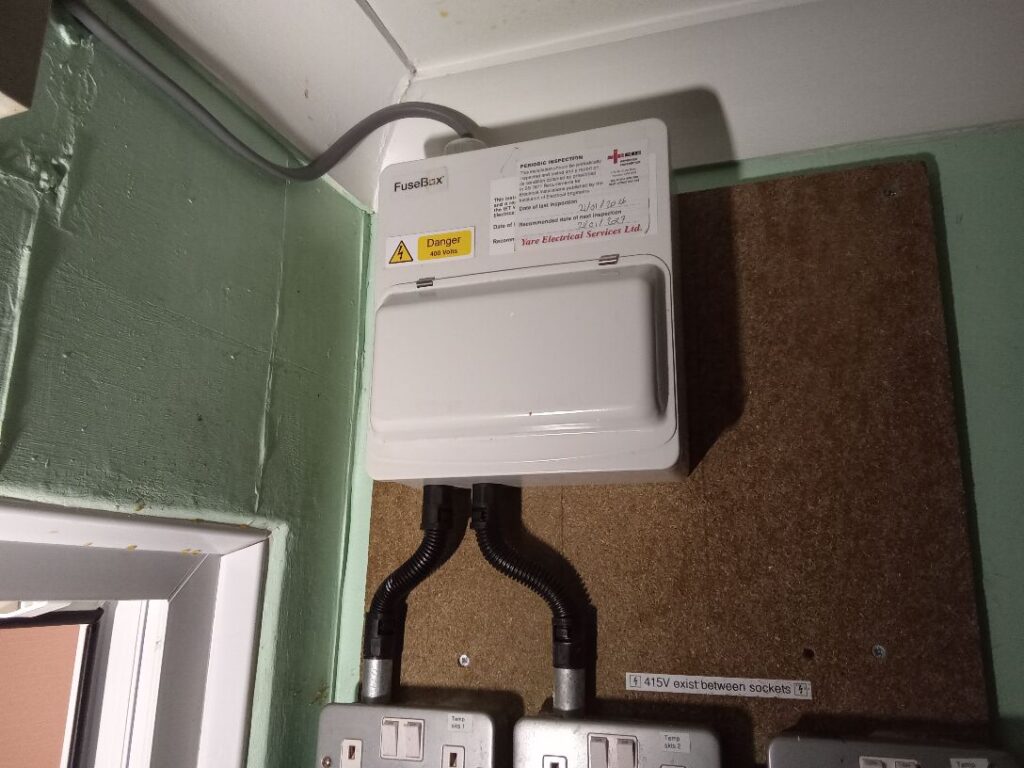
This is the one that actually matters. On completion a competent electrician provides you with the appropriate certificate — an Electrical Installation Certificate for new work, a Minor Works Certificate for smaller jobs, or an EICR where you’ve had an inspection — proving the work meets BS 7671 and, where it’s notifiable, that it has been registered under Building Regulations. Keep it: it protects your home, and it’s what your insurer and any future buyer’s surveyor will ask to see. An electrician who is vague about what paperwork you’ll get at the end is telling you something.
Bottom line: Spend 20 minutes on research—check NICEIC status, call three electricians, read reviews, get fixed prices in writing. It’s the difference between a safe, reliable job and a nightmare you’ll regret for years.